NeilKant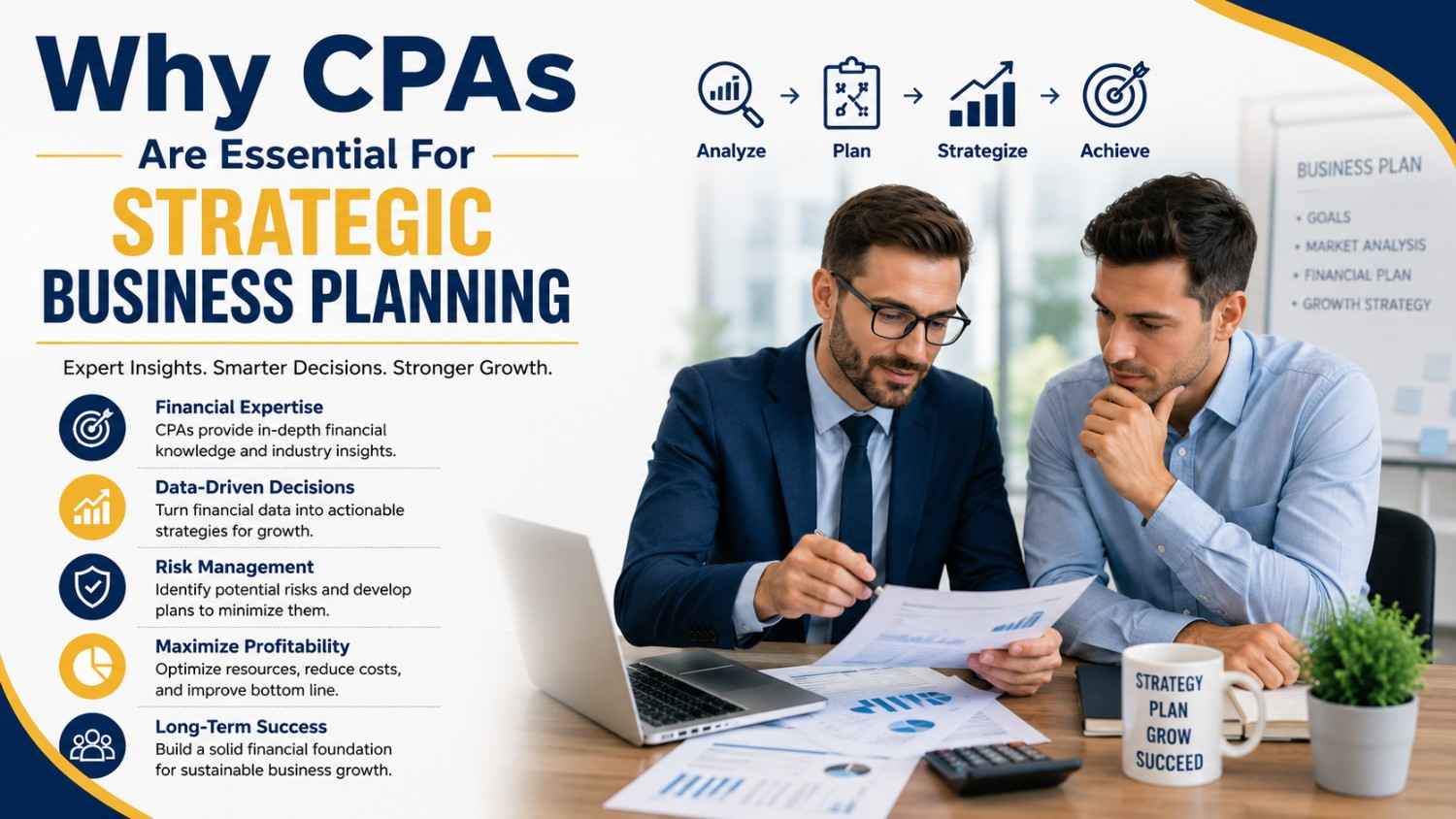
You might be feeling that you are working hard, the business is moving, invoices are going out, money is coming in, yet when you sit down to plan the next quarter or year, everything feels fuzzy. You have numbers, but not clarity. You have goals, but not a grounded path to reach them. That gap between what you want to build and what your financial picture is telling you can feel exhausting. midtown Manhattan small business accounting end
Because of this tension, you might wonder if you are missing something obvious. You may already use bookkeeping software, maybe you check your bank balance often, and you probably build a rough budget in a spreadsheet. Still, you are not fully sure if you can afford that new hire, open that new location, or ride out a slow season. That is where a Certified Public Accountant, or CPA, often becomes less of a “nice to have” and more of a strategic partner.
In simple terms, why CPAs are essential for strategic business planning comes down to this. They turn scattered financial data into a clear story, they help you see risks early, and they give you the confidence to make decisions that shape the future of your business. This is not about fancy reports. It is about having someone who understands both your numbers and your goals, and who can help you connect the two.
Why does strategic planning feel so hard when you are on your own?
Think about the last time you tried to plan your budget for the year. Maybe you looked at last year’s revenue, guessed a percentage increase, then tried to estimate costs. It probably felt like building a house on sand. You hope it holds, but you are not fully sure where things might collapse.
One common problem is that many owners confuse record keeping with strategy. A bookkeeper can tell you what happened. Strategic planning needs someone who can explain why it happened and what might happen next. When that piece is missing, you may end up with budgets that look neat but do not match reality. The U.S. Small Business Administration has written about classic budgeting mistakes, such as overestimating revenue and underestimating expenses, which can quietly erode your margins. You can see some of those “classic fails” described in their guidance on budgets and forecasts that go wrong.
There is also the emotional side. When the numbers feel unclear, every decision carries a lot of weight. You may delay investments because you are afraid of running out of cash. Or you may move too fast because things “feel” good, only to face a surprise tax bill or a tight cash crunch months later. That constant second-guessing is tiring.
So, where does a CPA fit into all of this?
How does a CPA move you from guessing to grounded strategy?
Certified Public Accountants are trained not just to prepare returns or review books. They are trained to see the financial structure of a business and to advise on what that structure means for your next move. As one overview of the CPA’s role in business explains, they often help owners interpret financial reports, control costs, and plan for growth, not just “do the taxes.”
Imagine three common situations.
First, you are thinking about hiring a key employee. Without a CPA, you might look at your current profit and say, “I think I can afford it.” With a CPA, you would model different revenue scenarios, factor in payroll taxes and benefits, and see how that hire affects your cash flow over the next 12 to 18 months. Instead of a gut feeling, you get a clear picture of what needs to be true for that hire to be safe.
Second, you are facing uneven revenue. Many solo owners and very small businesses have feast or famine cycles. The SBA has shared strategies for winning while working solo, and a recurring theme is the need for financial discipline and planning. A CPA can help you build reserves, smooth out your cash planning, and set up a budget that respects the ups and downs of your industry.
Third, you are planning for growth. Maybe you want to expand into a new market or invest in new equipment. A CPA can compare different financing options, help you understand the tax impact, and build financial projections that support a bank loan or investor conversation. This turns your idea into a plan that others can trust.
All of this is part of strategic financial planning with a CPA. It is not just about this quarter’s profit. It is about how today’s decisions shape your business one, three, or five years from now.
Also Read: 5 Reasons Small Businesses Thrive With Professional Tax Guidance
Should you do it yourself or work with a CPA for planning?
You might be wondering if you really need a professional, especially if your business is still small. That is a fair question. Some owners do a mix of DIY and outside help. The key is to be honest about the tradeoffs.
| Approach | What it looks like in practice | Main benefits | Main risks |
|---|---|---|---|
| DIY planning without a CPA | You create your own budget and cash forecast in spreadsheets. You rely on software reports and online advice. You review your numbers when you have time. | Low direct cost. You stay close to every detail. Flexible and fast for small decisions. | Easy to miss tax and compliance issues. Budgets often too optimistic. A less objective view of risk. Stress from not knowing what you do not know. |
| Occasional check-ins with a CPA | You manage daily finances. You meet a CPA a few times a year for reviews, tax planning, and big decisions. | Professional review of your assumptions. Better tax outcomes. Stronger forecasts for major choices like hiring or borrowing. | Gaps between meetings if things change fast. You still carry much of the day-to-day planning load. |
| Ongoing strategic partnership with a CPA | CPA helps build your budget, cash flow, and long-term plan. Regular check-ins. They coordinate with your bookkeeper or internal team. | Aligned financial plan tied to your goals. Early warning on problems. Stronger position with banks and investors. More confident decisions. | Higher upfront cost. Requires you to share information and commit to regular conversations. |
For many owners, the sweet spot is the middle or the third option. You retain control and visibility, but you are no longer trying to carry all the financial planning on your shoulders. That is when a trusted CPA for business planning turns from an expense into a form of risk protection.
Three steps you can take now to bring a CPA into your planning
- Get your current financial picture in one place
Before you even contact a CPA, pull together your core information. This includes profit and loss statements, balance sheets, bank statements, past tax returns, and any existing budgets or forecasts. Do not worry if they are not perfect. The goal is to give a CPA a starting point. When you see everything in one place, you will also start to notice patterns and questions you want to bring to that conversation.
- Clarify your next 12 to 24 month decisions
Write down the decisions that are keeping you up at night. For example, “Can I afford to hire a manager?” “Should I renew this lease,” or “Is it time to stop bootstrapping and look for a loan?” A CPA can be most helpful when there are real choices on the table. If you can tell them what you are weighing, they can shape the analysis around those questions instead of giving you generic advice.
- Interview CPAs with strategy in mind, not just tax
When you speak with potential CPAs, ask how they support strategic planning. Ask how often they meet with clients, what kind of forecasting tools they use, and how they have helped similar businesses grow or stabilize. You are not just hiring someone to file returns. You are looking for a partner who will challenge your assumptions in a respectful way and who can explain complex financial ideas in clear, calm language.
Moving from uncertainty to informed, confident planning
You do not need to become a financial expert to run a strong business. You do need access to clear, honest information and someone who can help you read what the numbers are trying to say. That is the real reason professional CPA support for business strategy is so powerful. It turns vague worry into specific questions, and then into grounded decisions.
If you feel behind or disorganized, you are not alone. Many successful owners started from the same place, feeling like they were always reacting instead of leading. Bringing a CPA into your planning is not an admission of weakness. It is a sign that you take your role as a decision maker seriously.
You deserve to run your business with more confidence and less guesswork. Reach out to a qualified Certified Public Accountant, share your goals and your concerns, and start building a strategic plan that your numbers actually support.