
 NeilKant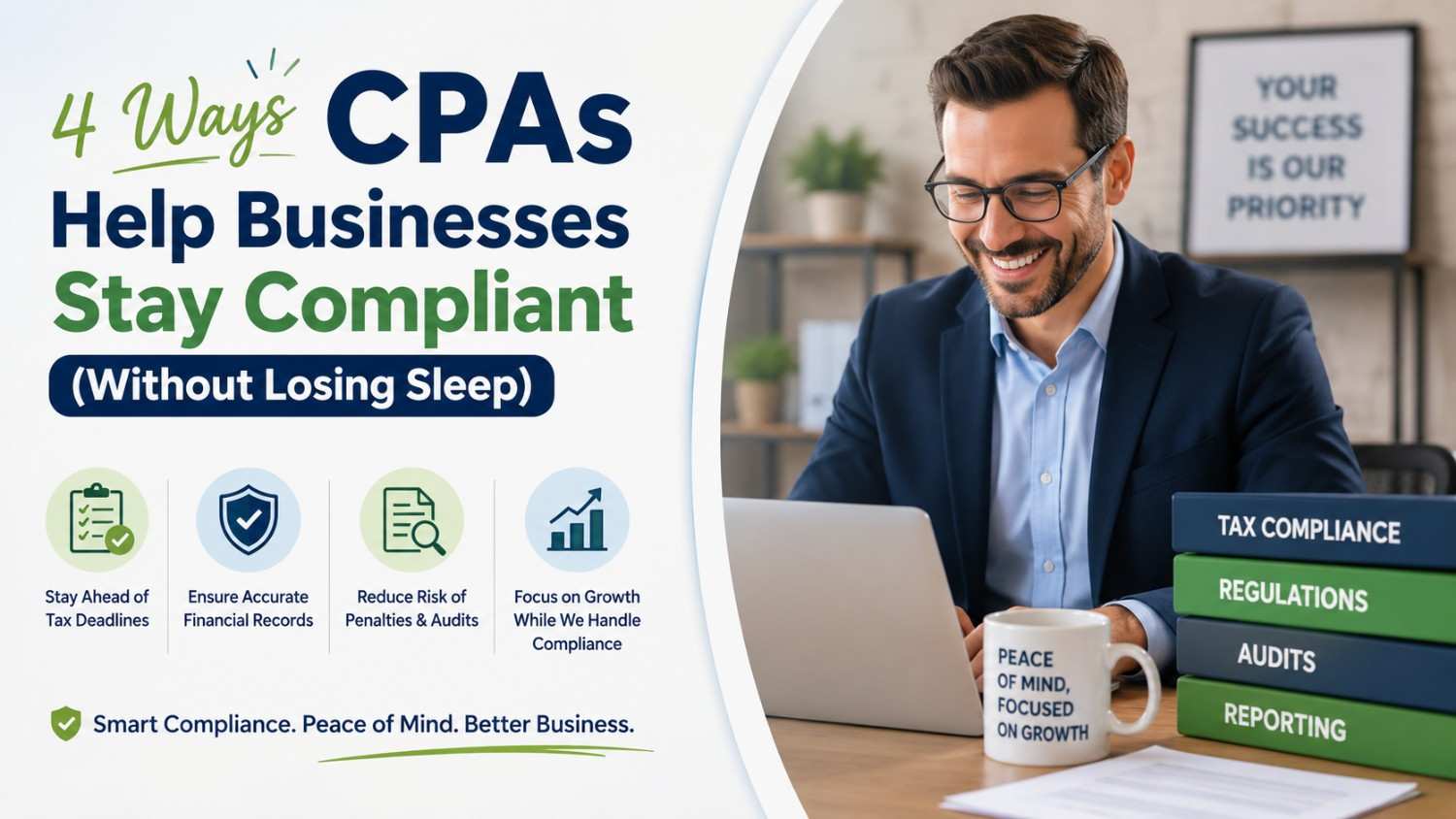
You might be feeling that every time you catch up on one rule, three new regulations appear. It started with a simple question about taxes, then you heard about payroll filings, sales tax, new reporting rules, Everett international tax planning, and suddenly you are wondering if a missed form could cost you real money.end
That quiet anxiety is common. You want to focus on your customers and your team, not on whether a letter from the IRS or your state is waiting in the mail. At the same time, you know that “I didn’t know” is not a defense if something goes wrong.
The short version is this. A Certified Public Accountant can act as your guide through the maze. A good CPA does far more than file your tax return. They help you set up sound systems, translate complex rules into clear actions, and lower the risk of penalties and surprise bills. The four core ways they help are by keeping your filings accurate and on time, building compliant recordkeeping, advising on business structure and payroll, and standing between you and tax authorities when issues arise.
So where does that leave you if you are trying to decide whether you really need one, or if you can keep managing on your own?
Why staying compliant feels so hard for business owners
The problem usually starts small. You launch a product or service, you get a few clients, and you file a simple tax return. Then growth hits. You hire your first employee. You start collecting sales tax in more than one state. You bring in a contractor. You open a second location. Each change adds a new layer of rules.
Because of this, you might feel a constant tension. You know compliance matters, yet you do not have the time or the expertise to keep up with shifting tax laws and reporting requirements. You may be wondering what is worse. Overpaying taxes out of caution, or underpaying and facing penalties later.
Here are some of the specific challenges many owners face.
Emotionally, there is the fear of the unknown. A notice from the IRS or your state can feel like a judgment, even when it is just a request for clarification. This fear can lead to avoidance. Important envelopes sit unopened, and small issues quietly grow into bigger ones.
Financially, noncompliance can be expensive. Late filing penalties, interest on unpaid tax, payroll tax mistakes, or misclassified workers can all drain cash you planned to use for growth. Even if you avoid penalties, poor planning can mean missed deductions and credits that would have lowered your tax bill.
Legally, there is the risk that a pattern of noncompliance, even accidental, can trigger closer scrutiny. For example, repeatedly filing late payroll tax returns or ignoring information notices can increase the chance of an audit, which pulls time and attention away from your business.
So how do CPAs who support business compliance step into this picture and calm things down?
1. How CPAs keep your returns accurate and on time
One of the clearest ways a CPA helps is by making sure your tax returns are complete, correct, and filed when they should be. That sounds simple, yet the details are where many owners stumble.
A CPA understands not just the main income tax return, but also payroll filings, sales and use tax, estimated tax payments, information returns for contractors, and more. They create a filing calendar, track deadlines, and match your business activity to the right forms.
Imagine you hired several contractors last year. In January, you must issue Forms 1099 to those who qualify. Miss that step, and you might face penalties. A CPA will help you identify who needs a form, gather the right information during the year, and file everything on time.
If you are still deciding what type of tax professional you need, the IRS offers guidance for small business owners on selecting a tax professional as a small business taxpayer. This resource can help you understand different credentials and what they mean.
2. How CPAs build systems that keep you compliant year round
Many owners think compliance is something that happens once a year during tax season. In reality, staying compliant is a year round process, and this is where a CPA’s value often becomes clear.
A strong CPA will help you set up bookkeeping and recordkeeping systems that capture the right data from day one. That might mean choosing accounting software, creating a chart of accounts that matches your industry, and building routines for recording income and expenses.
Why does this matter so much? Because when your records are clean and organized, your returns are more accurate, your deductions are easier to prove, and your audit risk is lower. You are not scrambling at the end of the year to reconstruct what happened from bank statements and memory.
For example, a CPA might notice that your business meals, travel, and home office expenses are not being tracked in enough detail. They will help you correct that now, rather than discovering missing documentation years later during an audit.
3. How CPAs guide decisions about structure, payroll, and growth
Compliance is not only about forms. It is also about the choices you make as you build your business. The way you are structured, how you pay yourself, and how you treat workers all have legal and tax consequences.
A CPA can explain the differences between operating as a sole proprietor, partnership, S corporation, or C corporation, and how each option affects your taxes and reporting. They can help you understand when a change in structure might reduce taxes or lower risk, and when it might create extra complexity without much benefit.
Payroll is another tricky area. Misclassifying an employee as an independent contractor can lead to back taxes, penalties, and unhappy workers. A CPA can help you apply the right tests, set up payroll systems, and coordinate with payroll providers so that tax deposits and filings match what is required.
If you want a broader view of what it means to stay legally compliant as you grow, the U.S. Small Business Administration has a helpful guide on how to keep your business legally compliant. A CPA often works in parallel with these types of guidelines to keep you aligned with both tax and general business rules.
4. How CPAs step in when the IRS or state comes calling
Even with the best systems, questions and notices can still arise. When they do, having a CPA in your corner can lower stress dramatically.
A CPA can review notices, explain what they mean, respond on your behalf, and help you gather any documents needed. If there is an error, they can help correct it. If there is a balance due, they can help you understand your options.
Without this support, it is easy to panic or to ignore the problem. With it, you have a clear plan and a professional who speaks the same language as the agency involved.
For those still choosing who should prepare their returns, the Taxpayer Advocate Service offers guidance on how to choose a tax return preparer. This can help you distinguish between different types of preparers and understand why a licensed CPA may be a better fit for complex business needs.
Should you handle compliance yourself or work with a CPA?
You might be wondering whether you should keep managing everything on your own or bring in a professional. The choice depends on your comfort level, your time, and the complexity of your business.
| Approach | When it can work | Main risks | How a CPA changes the picture |
|---|---|---|---|
| DIY compliance and tax filing | Very simple businesses with one owner, few transactions, and no employees | Missed deductions, late filings, misunderstanding rules, higher stress | CPA reviews your setup, corrects errors early, and provides guidance as complexity grows |
| Using basic tax software only | Owners who are detail oriented and comfortable reading instructions | Software cannot fully interpret your situation or give proactive advice | CPA interprets gray areas, tailors strategies, and advises on structure and planning |
| Working with an unlicensed preparer | Simple returns where cost is the only concern | Quality can vary, limited accountability, less support in audits | CPA is licensed, regulated, and trained to represent you and maintain standards |
| Partnering with a business-focused CPA | Growing businesses, multiple owners, employees, or multi-state activity | Higher upfront cost than DIY | Lower risk of penalties, stronger planning, and less time spent worrying about compliance |
The more moving parts your business has, the more sense it makes to treat a business compliance CPA as part of your core team, not as a once-a-year expense.
Three practical steps you can take starting today
You do not need to overhaul everything at once. A few clear actions can put you on a better path and help you make the most of a CPA’s support.
1. Map out your current obligations in one place
Write down every filing and payment you are responsible for. Include income tax, estimated payments, payroll tax filings, sales tax, information returns like Forms 1099, and any local business licenses. Note the due dates and who is currently handling each item. This simple list often reveals gaps or areas where you are relying on memory. A CPA can review this map with you and confirm what is missing or can be simplified.
2. Clean up and centralize your financial records
If your information is spread across bank statements, spreadsheets, and email receipts, choose an accounting system and start pulling everything into it. Even if you only categorize transactions for the current year, this step reduces chaos. When you meet with a CPA, having organized records means they can spend more time advising you and less time sorting through paper.
3. Have an honest planning conversation with a CPA
Schedule a meeting with a Certified Public Accountant and go in with your questions and concerns. Share your growth plans, any notices you have received, and where you feel unsure. Ask them where your biggest compliance risks are and what changes would have the most impact. This conversation can turn an overwhelming tangle of rules into a clear, prioritized plan.
Also Read: Recovery After Cancer Surgery: Tips for Faster Healing and Better Quality of Life
Moving forward with more confidence and less worry
Running a business will always involve some uncertainty. Yet your compliance situation does not need to feel like a constant threat. When you work with a trusted CPA, the rules become something you manage, not something that manages you.
The four ways CPAs help businesses stay compliant all share the same goal. To protect your time, your money, and your peace of mind. They help you file correctly and on time, build strong systems, make smart structural choices, and handle any contact with tax authorities from a position of calm preparation rather than fear.
You do not have to fix everything overnight. Start with one step. Clarify your obligations, organize your records, and reach out to a CPA who understands small business. Each move brings you closer to a business that feels steady, lawful, and ready to grow.





)