NeilKant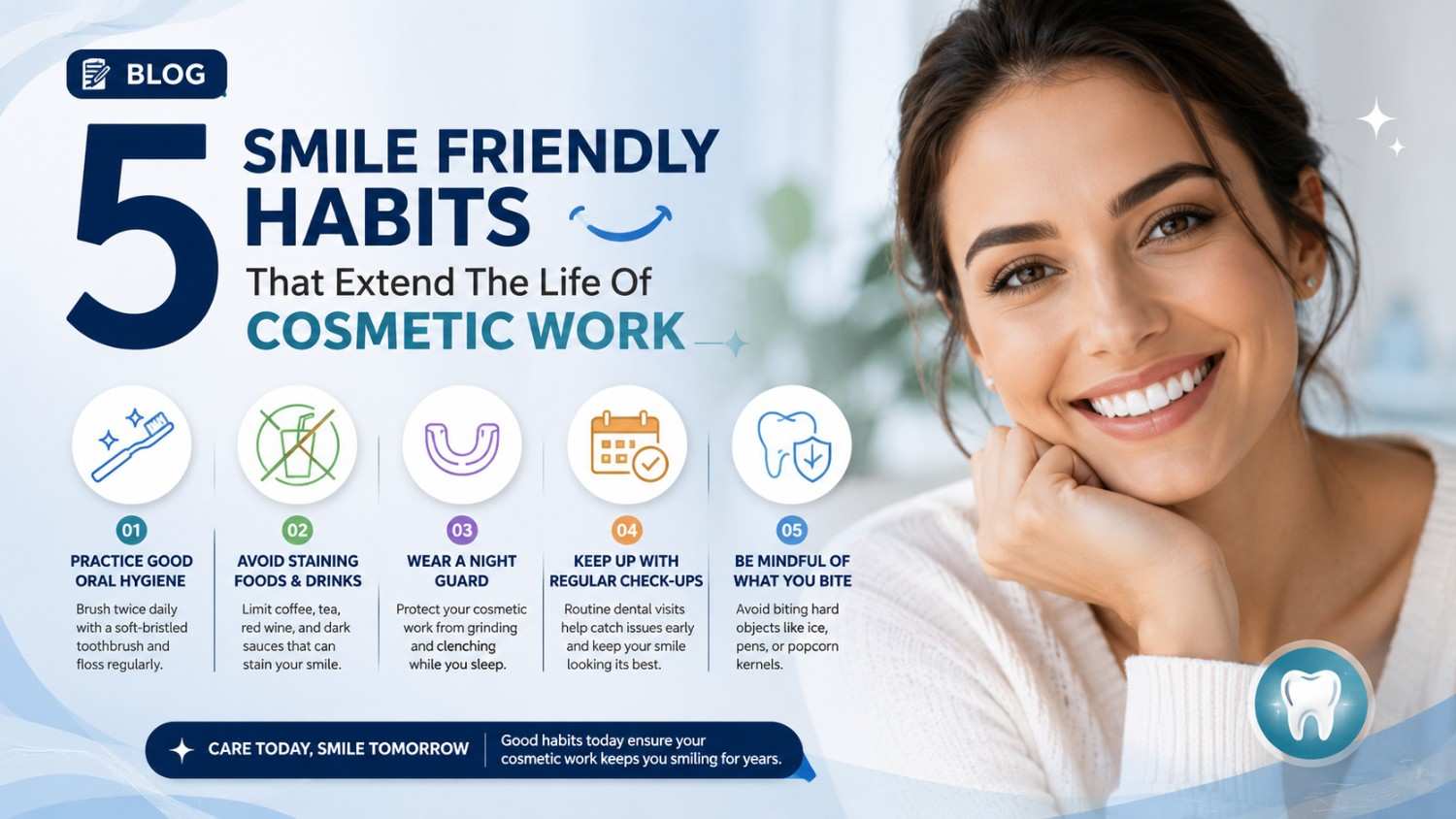
You might be feeling a mix of relief and worry right now. Relief because your cosmetic dental work is finally done and you like what you see in the mirror. Worry because you know it was an investment in both time and money, and you do not want to be back in the chair at your Wichita dentist fixing the same problems a few years from now.
Maybe you have crowns, bonding, veneers, or whitening. At first everything looked perfect. Then a tiny chip showed up on an edge, or your gums felt a little sore, or your bright white shade started to fade. You start wondering if you did something wrong, or if cosmetic dentistry just does not last very long.
You are not alone in that feeling. Cosmetic work can absolutely last for many years, but it does not last forever on its own. It needs you as a partner. The short version is this. If you protect your teeth from stress, clean them in the right way, and keep up with checkups, you can often double the life of your cosmetic dentistry and avoid costly repairs.
So where does that leave you right now? It means you do not need a complete lifestyle overhaul. You just need a handful of smile friendly habits that quietly work in the background every day.
Why cosmetic dentistry fails sooner than it should
Think about what your cosmetic work is doing. Crowns, veneers, bonding, and whitening are all trying to make damaged or stained teeth look and feel natural again. They are strong, but they are not indestructible. They live in the same mouth that caused problems in the first place.
The problem usually starts small. You skip flossing for a few days. You chew ice while working on a deadline. You forget your night guard a few nights in a row. None of these choices seems dramatic in the moment, yet they quietly chip away at the edges of your restorations and your natural enamel.
Because of this, you may end up in a frustrating loop. You pay for cosmetic work, enjoy it for a while, then suddenly you are talking about replacements, root canals, or more advanced treatment. Emotionally, it feels discouraging. Financially, it can feel like you are pouring money into something that does not last.
Here is the good news. Most early failures are preventable. Materials like modern ceramic crowns and veneers are designed to be very durable. They can last a decade or longer when they are protected from constant grinding, harsh brushing, and bacteria. The habits that protect them are simple, but they have to be consistent.
So what actually helps your cosmetic work last longer in real life, not just in theory?
Habit 1: Treat crowns and veneers like real teeth, because they are tied to them
It is easy to think of a crown or veneer as armor. Something strong enough to take anything you throw at it. In reality, every crown or veneer is attached to a real tooth underneath. If that tooth gets decay, gum disease, or a crack, the cosmetic work on top is at risk.
Crowns in particular need careful care. You can read more about how they work and how long they last on this American Dental Association crowns guide. The key point is this. A crown protects, but it does not make a tooth invincible.
That means you should brush twice a day with a soft brush, floss carefully where the crown meets the gumline, and never use your teeth as tools to open packages or bite through hard objects. Every time you do, you are sending force through that crown to the tooth below.
Habit 2: Build a simple, gentle daily cleaning routine
You do not need a complicated bathroom shelf full of products. You need a routine you will actually follow, even on tired nights. A good oral hygiene routine protects your cosmetic work by keeping the gums healthy and stopping decay at the margins where restorations meet natural tooth.
The basics are clear. Brush twice a day for two minutes with fluoride toothpaste and a soft toothbrush. Clean between your teeth once a day with floss or an interdental brush. For many people, that is enough when done consistently. You can see simple step by step advice in this oral hygiene guide from the NIDCR.
Gentle is the word to remember. Scrubbing hard with stiff bristles or snapping floss against your gums does not clean better. It just wears down enamel and irritates tissue, which can shorten the life of bonding or veneers at the gumline.
Habit 3: Understand and reduce teeth grinding and clenching
If you have spent money on a brighter, straighter smile, the fastest way to damage it is to grind or clench your teeth day and night. Many people do this in their sleep or during stressful moments without even noticing. Over time, that pressure can crack porcelain, chip bonding, and wear down enamel.
Signs include morning jaw soreness, headaches at the temples, flattened or chipped edges, and small fractures you can feel with your tongue. Untreated grinding, called bruxism, does not just threaten cosmetic work. It can damage natural teeth too. You can read more about it in this MedlinePlus overview of teeth grinding.
Simple changes can make a real difference. A custom night guard spreads out biting forces and protects your cosmetic work while you sleep. Paying attention to daytime clenching and relaxing your jaw when you notice it reduces constant stress on your teeth. In some cases, treating underlying stress or sleep problems helps reduce grinding as well.
Habit 4: Watch what you eat and drink around your cosmetic work
Every bite and sip either supports your smile or slowly works against it. Very hard foods can crack porcelain or chip bonding. Sticky sweets can cling to crown margins and feed decay causing bacteria. Dark drinks can stain natural teeth and the edges of restorations, so over time the color match can change.
You do not have to give up all your favorites. The goal is awareness. If you have a habit of crunching ice, chewing on pens, or snacking on hard candies, it is worth changing those habits to protect both cosmetic and natural teeth. If you love coffee, tea, or red wine, rinsing with water afterward and not sipping all day can reduce staining and acid exposure.
A balanced diet helps your gums and bone stay strong, which supports cosmetic work long term. That means enough calcium, vitamin D, and vitamin C, and keeping sugary snacks to a minimum. The CDC oral health tips for adults offer simple guidance on how daily choices affect your mouth.
Habit 5: Keep regular checkups, even when everything feels fine
Many people cancel checkups once their cosmetic work is done, because they feel they finally “fixed” their mouth. The truth is, that is the moment when regular visits become even more important. Small issues that are easy to repair early can become expensive problems if they are ignored.
Your general and cosmetic dentist is looking for tiny cracks, early decay at the edges of crowns or veneers, gum inflammation, and bite changes that could stress your restorations. These are things you often cannot see or feel on your own until they are advanced.
Think of checkups as maintenance for an investment. A short visit twice a year can add many years of life to your cosmetic dentistry and help you avoid emergency visits that are painful and costly.
How much do these habits really matter for cosmetic work longevity?
You might wonder if these smile friendly habits really change anything, or if cosmetic work just lasts as long as it lasts. The truth is, your daily choices have a powerful effect on how long restorations stay strong and attractive. Here is a simple comparison.
| Habit pattern | What usually happens | Impact on cosmetic work |
|---|---|---|
| Consistent brushing and flossing, gentle technique | Healthier gums, less decay at edges of crowns and veneers | Restorations often last closer to their full expected lifespan |
| Irregular cleaning, hard scrubbing, skipping floss | Gum irritation, plaque buildup, early decay at margins | More repairs or replacements, higher long term cost |
| Uses a night guard and avoids chewing hard objects | Less cracking and chipping, more stable bite | Porcelain and bonding stay intact and look better longer |
| No night guard, frequent ice or hard candy chewing | Small fractures, chips, and wear appear over time | Shorter lifespan for crowns, veneers, and bonding |
The difference is not usually dramatic in a week or a month. It shows up over years. That is why forming habits early, right after cosmetic treatment, makes such a difference.
Three simple steps you can start today
- Set a “non negotiable” two minute brushing and one minute flossing routine
Pick two times that fit your life, such as after breakfast and before bed. Use a soft brush, fluoride toothpaste, and gentle circles along the gumline and around every restoration. Floss or use an interdental brush once a day, especially around crowns and between veneered teeth. Put your supplies where you can see them so you are reminded every night.
- Protect your teeth from grinding and hard chewing
If you notice morning jaw pain, flat edges, or your partner hears grinding, talk to your general and cosmetic dentist about a night guard. In the meantime, stop chewing ice, hard candies, or non food objects. When you catch yourself clenching during the day, rest your tongue lightly on the roof of your mouth and relax your jaw to break the pattern.
Also Read: 4 Cosmetic Dentistry Procedures That Deliver Natural, Long Lasting Results
- Schedule your next checkup and cleaning now
Do not wait for something to hurt or break. If it has been more than six months since you saw your dentist, call and schedule a visit. Ask specifically about how your crowns, veneers, or bonding are holding up and what you can do at home to support them. A short preventive visit usually costs far less than repairing a chipped veneer or a failed crown later.
Keeping your restored smile strong for the long run
You invested in your smile because you wanted to feel more confident and comfortable. That is not shallow. Teeth are a big part of how you show up in daily life. The habits that protect that investment are simple, but they ask for consistency, not perfection.
By focusing on smile friendly habits that extend the life of cosmetic work, you give your crowns, veneers, bonding, and whitening the best chance to last. A solid cleaning routine, protection from grinding, thoughtful food choices, and regular visits to a trusted general and cosmetic dentist all work together quietly in your favor.
You do not have to fix everything overnight. Choose one habit to strengthen this week, then build from there. Your future self, looking in the mirror years from now, will be grateful you did.