NeilKant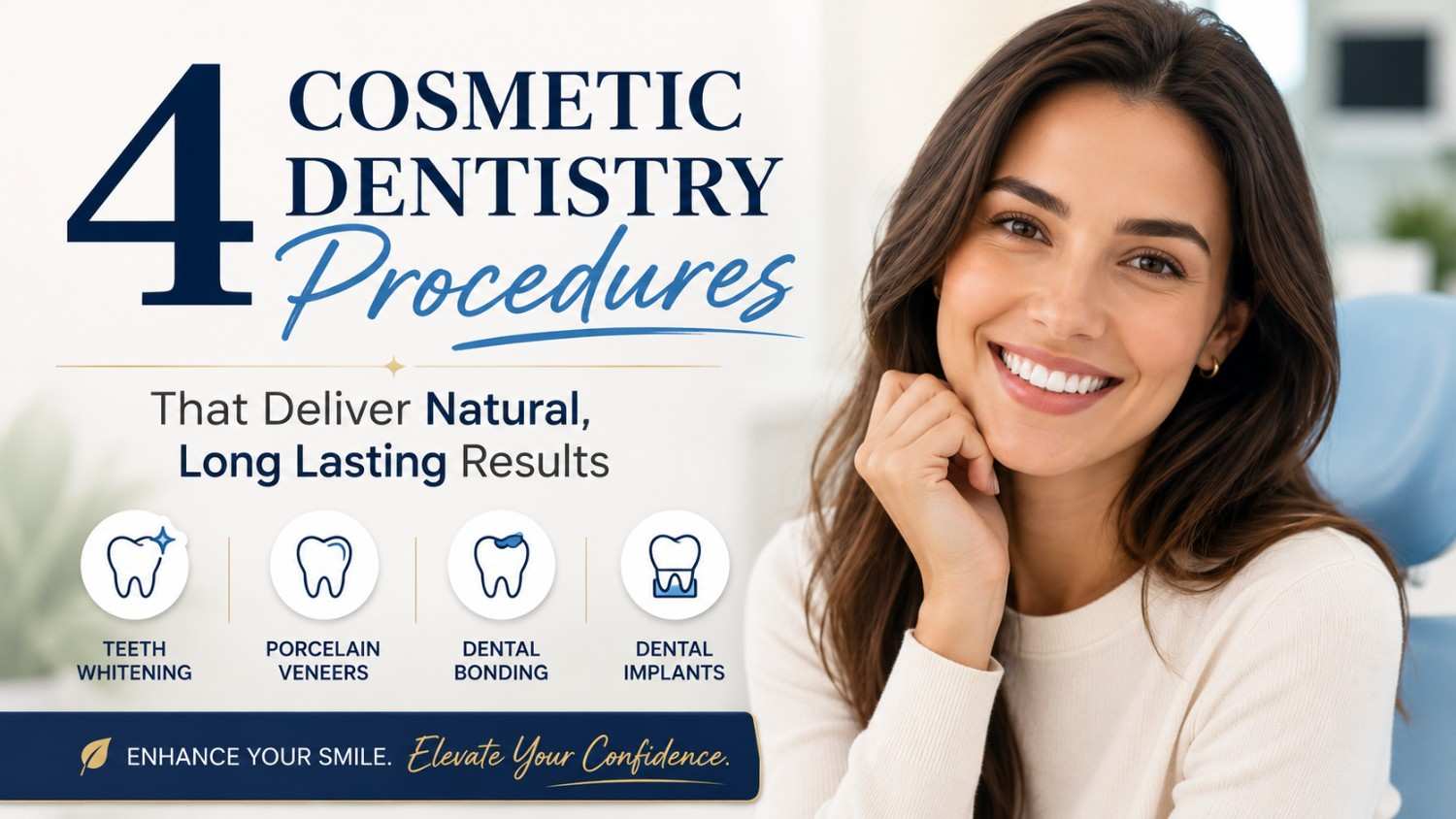
You might be feeling a little self-conscious every time you smile, maybe you cover your mouth in photos or avoid laughing too hard in public, because you are worried people will notice a chipped tooth, dark stains, or gaps you cannot unsee anymore. At the same time, you probably do not want an artificial-looking “Hollywood” smile that screams dental work. You want a judgment-free dentist in Phoenix, AZ and something that looks like you, just… better.end
Because of this tension, you might be stuck. You know cosmetic dentistry exists, yet you are not sure what is safe, what will last, or what will still look like your own teeth a few years from now. You may also be worried about the cost and the fear of choosing the wrong procedure.
Here is the short version so you can breathe a bit easier. Modern cosmetic dental treatments can be subtle, strong, and very natural. Four of the most trusted options are whitening, bonding, veneers, and modern crowns. Each one has different strengths, price ranges, and lifespans, and when chosen carefully with a general and cosmetic dentist, they can give you a long-lasting, authentic smile instead of a fake one.
Why does your smile feel “off,” and what is really bothering you?
It often starts small. A bit of coffee staining. A chip from biting a fork. A front tooth that twisted slightly over time. Individually, these issues seem minor, yet together they can change how you feel every time you see your reflection.
The problem is not just cosmetic. When you do not love your smile, you might avoid speaking up in meetings, shy away from dating, or skip social events. Over months and years, that quiet avoidance can impact confidence, career, and relationships. So this is not “just teeth.”
Then there is the mental tug of war. You may think, “I want my teeth to look better, but I do not want people to notice I had work done.” Or you may wonder if cosmetic care is “too vain” or not worth the investment. At the same time, you know that hiding your smile feels like you are hiding a part of yourself.
So, where does that leave you? It helps to understand what modern natural looking cosmetic dentistry can actually do, and how to match the procedure to the problem you want to solve.
Which cosmetic dentistry procedures actually look natural and last?
There are many options, yet four cosmetic dentistry procedures tend to give the best blend of natural appearance and durability when planned well.
1. Professional teeth whitening for stains and yellowing
If your main concern is color, not shape, whitening is often the simplest solution. Professional whitening uses stronger, controlled formulas that can lighten deep stains from coffee, tea, red wine, or just aging enamel.
It helps when:
- Your teeth are generally straight and healthy, just darker than you like.
- You have surface orage-related staining, not gray or brown internal discoloration from trauma or medication.
What to know:
- In-office whitening works faster. At home trays from your dentist can maintain or gradually brighten.
- Results usually last months to a couple of years, depending on habits like smoking or frequent coffee.
- Sensitivity is common but usually temporary.
Whitening is often a first step, because it sets the base color for any bonding, veneers, or crowns that follow.
2. Dental bonding for small chips, gaps, and rough edges
Bonding uses tooth colored resin that is sculpted directly on your tooth, then hardened with a curing light. When done with care, it can blend very nicely with your natural enamel.
It helps when:
- You have a small chip on a front tooth.
- There is a minor gap you want softened, not fully closed with orthodontics.
- The edges of your teeth look worn or uneven.
What to know:
- Bonding is usually less expensive than veneers or crowns.
- It can often be done in a single visit with minimal or no numbing.
- It is not as strong or stain-resistant as porcelain, so it may need touch-ups over the years.
Bonding is a good “gentle” option when you want a quick improvement without changing much of your natural tooth.
3. Porcelain veneers for a full smile makeover that still looks like you
Veneers are thin shells of porcelain that cover the front of your teeth. When planned thoughtfully, they can correct color, shape, size, and even mild misalignment while still looking like a natural, healthy smile, not a copy of someone else’s.
They help when:
- You have multiple concerns at once. Stains that do not respond well to whitening, chips, worn edges, or uneven shapes.
- You want a consistent, long-lasting change across several front teeth.
What to know:
- Porcelain is very stain-resistant and can last many years with good care.
- A small amount of enamel is usually removed, so veneers are a long-term commitment.
- Planning is everything. Discuss shape, length, and color in detail before starting.
If you want to understand veneers more deeply, the American Dental Association offers a clear overview of what dental veneers are and how they work.
4. Modern porcelain crowns for damaged or heavily filled teeth
Crowns cover the entire visible part of a tooth and are often used when there is significant damage or after root canal treatment. Older crowns could look opaque or bulky, yet modern porcelain and ceramic crowns can be very natural, especially in the front of the mouth.
They help when:
- A tooth is cracked, heavily filled, or weakened.
- You need both strength and a natural look, not just a cosmetic change.
What to know:
- Crowns usually require more reshaping of the tooth than veneers or bonding.
- They offer strong protection and can last many years.
- Matching color and translucency to nearby teeth is crucial for a natural result.
These four options are the core of natural, long lasting cosmetic dental work. A general and cosmetic dentist can also blend them with orthodontics or gum contouring when needed.
How do these options compare on cost, lifespan, and maintenance?
It can feel overwhelming to weigh everything at once. Seeing the options side by side can make things clearer. These are typical patterns, not exact promises, but they give a realistic sense of what to expect.
| Procedure | Best For | Typical Longevity | Relative Cost | Maintenance Needs |
|---|---|---|---|---|
| Professional Whitening | Stains and yellowing on otherwise healthy teeth | Months to a few years | Lower | Touch up trays, limit staining foods, good hygiene |
| Dental Bonding | Small chips, minor gaps, uneven edges | Several years | Lower to medium | May stain or chip, occasional repair or polishing |
| Porcelain Veneers | Multiple cosmetic concerns on front teeth | Many years with care | Medium to higher | Good home care, night guard if you clench, regular checkups |
| Porcelain or Ceramic Crowns | Weakened or damaged teeth that also need cosmetic improvement | Many years with care | Medium to higher | Check bite, protect from grinding, maintain gum health |
If you want a broader overview of cosmetic options, the Academy of General Dentistry offers a helpful guide to common cosmetic dentistry procedures and what they address.
What can you do right now to move toward the smile you want?
You do not need to decide everything today. A few grounded steps can shift you from worrying to planning.
- Get clear on what actually bothers you
Stand in good light with a mirror or take a close photo. Ask yourself:
- Is it the color, the shape, the size, or alignment that bothers me most
- Are there one or two teeth I dislike, or is it the whole smile
- Do I want a subtle refresh, or a more obvious change
Writing this down helps you and your dentist focus on the right procedures instead of guessing.
Also Read: Everything You Need to Know About Triple-Negative Breast Cancer
- Schedule a cosmetic consultation with a general and cosmetic dentist
In that visit, you can:
- Share what you wrote about your concerns and goals.
- Ask which options would keep your teeth looking natural, not overdone.
- Discuss timelines, costs, and what can be phased over time.
A good dentist will not push you. They will explain tradeoffs and help you decide what fits your life and budget.
- Protect the investment with simple daily habits
Even the best cosmetic work will not last if the basics are ignored. Simple habits make a big difference:
- Brush twice a day with a soft brush and fluoride toothpaste.
- Floss or use interdental cleaners daily to protect gums and edges of veneers or crowns.
- Wear a night guard if you grind or clench.
- Limit constant sipping of coffee, tea, and soda, especially after whitening.
- Keep regular checkups so small issues are caught early.
Moving toward a smile that feels like “you,” only more confident
You do not have to choose between living with a smile you dislike and ending up with something fake. With thoughtful planning, modern cosmetic dentist services can keep the character of your natural teeth while softening or correcting the parts that bother you most.
You deserve to smile, speak, and laugh without that quick flash of self-conscious worry. One careful conversation with a trusted general and cosmetic dentist can be the first step toward that kind of everyday ease.