NeilKant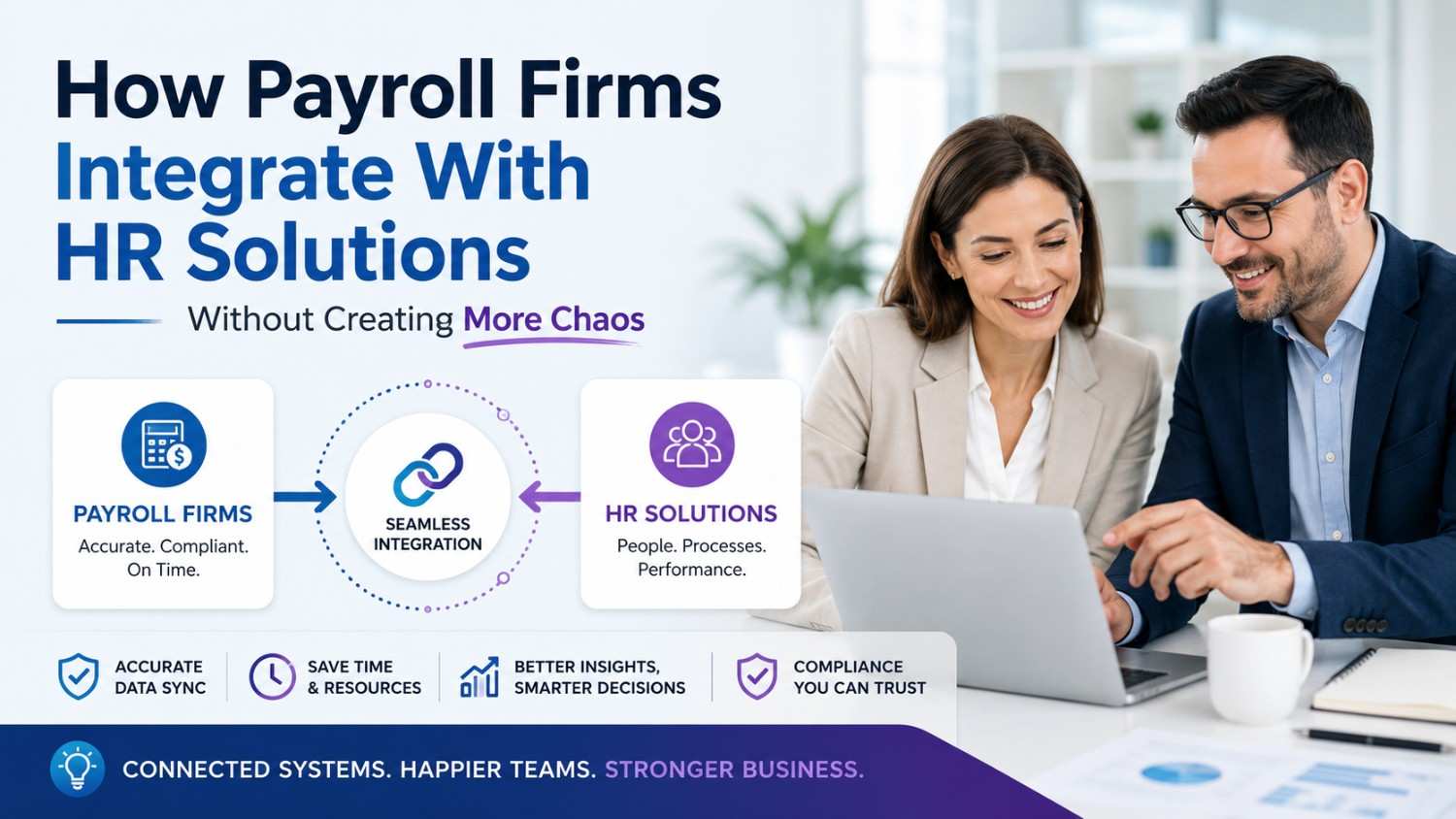
You might be feeling like your payroll and HR systems are having two different conversations, in two different rooms, at two different times. Whether you’re managing a large organization or looking for small business payroll services in Portland, payroll closes one set of numbers, HR updates another set of records, and you are stuck in the middle trying to explain why someone’s paycheck is wrong or why a leave balance does not match what they see in the portal.
It often starts small. One off-cycle payment here, one manual spreadsheet there. Then a new HR platform is added, or your payroll firm upgrades its system, and suddenly simple questions like “How many people did we actually pay this month?” are surprisingly hard to answer. That is usually the point where you start wondering whether how payroll firms integrate with HR solutions is actually helping you or quietly creating risk.
So where does that leave you. In short, you want payroll and HR to feel like one connected process, not two competing systems. You want fewer manual fixes, fewer awkward conversations with employees, and a clear audit trail you can stand behind. The good news is that thoughtful integration can get you there. The rest of this page walks through what goes wrong, what good integration looks like, and how you can move toward something calmer and more reliable.
Why does payroll and HR integration feel so hard right now?
The heart of the problem is that payroll and HR care about the same people for different reasons. HR cares about jobs, grades, locations, managers, benefits, and leave. Payroll cares about hours, rates, deductions, and taxes. When these two sets of data live in separate systems with weak connections, you shoulder the burden of reconciling them.
Imagine this. HR updates an employee from part time to full time on Monday. Payroll pulls its data snapshot on Tuesday. The change does not flow through. The employee’s benefits and salary are still calculated at the old rate. By Friday, you are fixing the payroll run, reassuring a confused employee, and trying to document what happened. One small disconnect leads to a full week of cleanup.
Because of this tension, you might also be feeling pressure from different sides. Finance wants accuracy and predictability. HR wants flexibility and a good employee experience. IT wants security and standardization. Your payroll firm is promising automation. Yet you are the one who knows that if one field is mapped wrong, you could be unwinding the damage for months.
There is also a quieter stress. Compliance. Public sector examples like the Federal Personnel and Payroll System, described in the FPPS privacy impact assessment, show how many controls, approvals, and data protections are wrapped around even basic personnel and pay data. If your integration is loose or undocumented, you are not just dealing with inconvenience. You are carrying legal and reputational risk too.
Also Read:
So what does “good” integration between payroll firms and HR solutions look like?
Strong integration is not just about connecting two pieces of software. It is about creating one shared source of truth for employee data and one predictable flow for how changes move from HR to payroll and back again.
At a practical level, when a payroll firm is properly integrated with your HR solution, a new hire should be entered once in HR, then flow into payroll with the right rate, schedule, and tax setup. A promotion should update job data, pay, and any related allowances without someone retyping the same information. A termination should close out pay, benefits, and system access in a coordinated way.
Government shared service platforms illustrate how this can work in real life. For example, the Treasury’s HRConnect core HR applications show how a central HR system can anchor personnel records while integrating with payroll and other services. You may not be in the federal space, but the principle is the same. One core HR record. Controlled data feeds into payroll. Clear rules about who owns which fields and which system is “master” for each type of data.
When payroll firms talk about “HR and payroll integration” or a connected HR and pay service, the best ones mean more than just a file transfer. They mean mapped fields, scheduled syncs, clear error handling, and visibility into what moved and when. In other words, fewer surprises on pay day.
Also Read: 4 Cosmetic Dentistry Procedures That Deliver Natural, Long Lasting Results
What should you weigh when choosing how your payroll firm integrates with HR?
You might be deciding whether to keep manual processes or lean into fuller integration with a payroll firm. Or you might already be integrated and wondering if it is worth tightening things up. The comparison below highlights what typically changes when you move from “mostly manual” to a more integrated setup.
| Question | Manual HR & Payroll | Integrated HR & Payroll Firm |
|---|---|---|
| How often is employee data entered? | Multiple times in different systems | Entered once in HR, then shared with payroll |
| Risk of pay errors | Higher, especially after changes or off-cycle events | Lower, if mappings and validations are well set up |
| Time spent on reconciliations | Many hours each cycle matching HR lists to payroll reports | Focused on exceptions instead of every line item |
| Compliance and audit trail | Emails, spreadsheets, and ad hoc notes | System logs and standard workflows with clearer evidence |
| Employee experience | More corrections after pay day, slower updates | Faster, more accurate reflection of changes in pay and leave |
| IT and security posture | Multiple uploads and downloads of sensitive data | Controlled integrations with fewer data handoffs |
So where does that leave you. If your current world looks a lot like the “Manual” column, you are probably spending more time cleaning up issues than improving processes or supporting your people. A better integrated payroll and HR service will not remove every problem, but it can reduce the number of avoidable mistakes and give you more control over the ones that remain.
Three practical steps to make HR and payroll integration safer and calmer
- Map your “one source of truth” before touching any technology
Before you change systems or sign a new agreement with a payroll firm, sit down and decide which system owns which data. For example, HR typically owns job titles, grades, and locations. Payroll might own tax codes, pay elements, and bank details. Write it down in a simple table. One column for data field. One for system of record. One for who is allowed to change it.
This sounds basic, yet it is where many integrations fail. When you know exactly where each field should originate, you can hold your payroll firm and your HR vendor accountable for aligning to that map.
- Insist on clear error handling and visibility from your payroll firm
Things will go wrong sometimes. A field will be missing. A code will not match. What matters is whether you can see those issues quickly and fix them before pay day. Ask your payroll firm how errors from your HR feed are surfaced. Do they appear in a dashboard. Do you receive alerts. Can you easily review and correct them.
Also ask for test cycles with real but anonymized data before you rely on the integration for live payroll. A few dry runs can reveal mismatched codes, missing fields, or timing issues that would otherwise show up as pay errors.
- Build simple, human checklists around the technology
Even the best integrated systems still need people watching key points in the process. Create short checklists for HR and payroll to follow each cycle. For HR, that might include confirming all approved changes are entered by a certain cutoff. For payroll, that might mean reviewing an exceptions report for new hires, rate changes, and terminations.
Keep the checklists short enough that people will actually use them. Over time, refine them as you notice where mistakes still happen. The goal is not to control people. It is to give them a clear path through a process that can otherwise feel confusing and rushed.
Bringing HR and payroll back into one calmer story
You are not alone if your current payroll and HR setup feels disjointed, fragile, or simply exhausting to manage. Many organizations grow faster than their systems, then wake up one day to find that every change requires three emails, two uploads, and at least one apology to an employee whose pay was not right.
Thoughtful integration between your payroll firm and your HR solution will not solve every challenge you face with people, compliance, or budgets. It can, however, give you a more stable foundation. One set of records you trust. Clear ownership of data. Fewer manual fixes. More time to focus on the human conversations that matter most.
You deserve an environment where payroll is predictable, HR data is respected, and your role is not defined by constant firefighting. The first step is often just acknowledging that what you have now is not serving you, then choosing one small improvement to move things forward. From there, better integration becomes less of a technical project and more of a quiet shift toward sanity.