NeilKant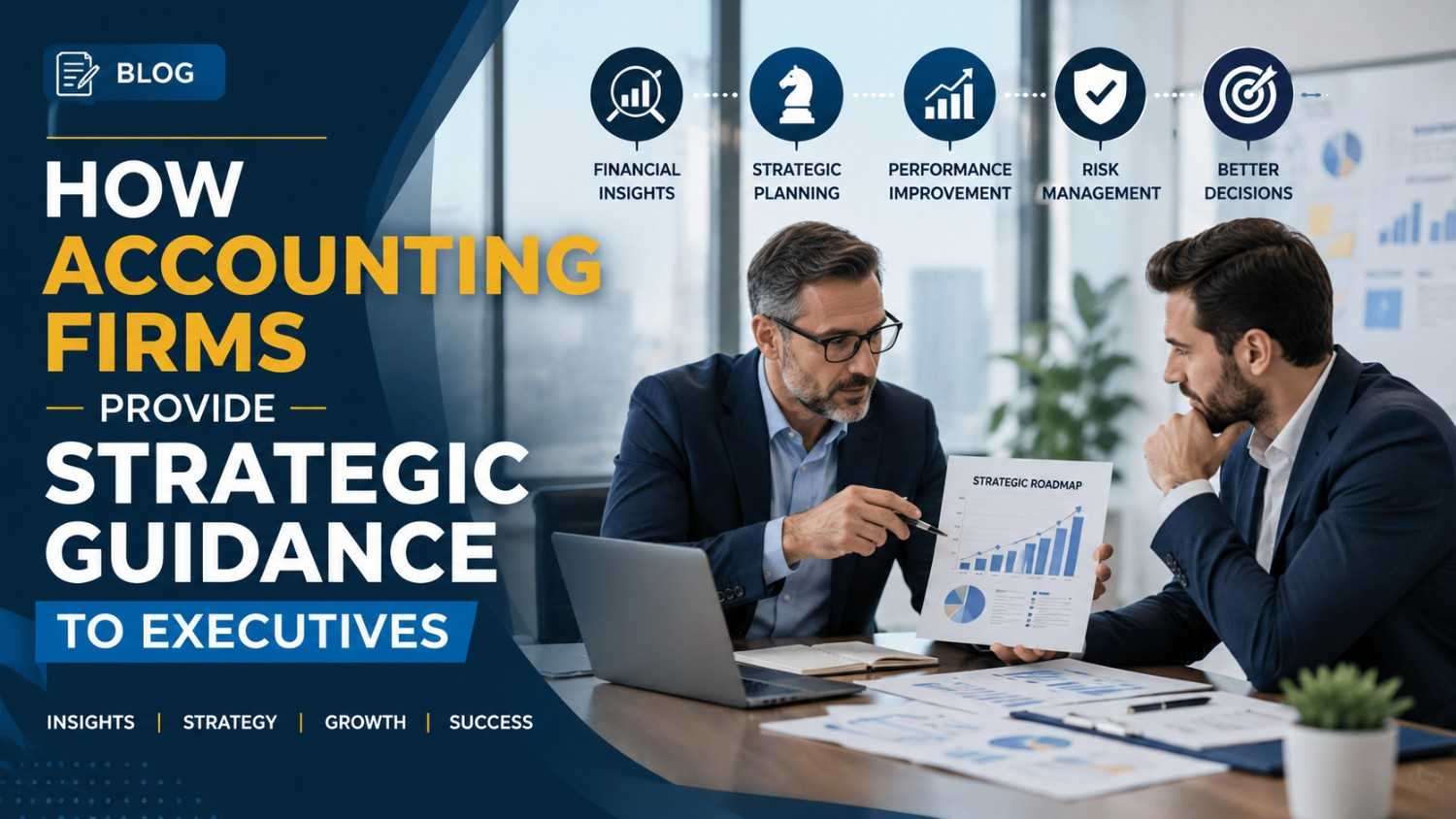
You might be feeling that the numbers in your business no longer tell a clear story. Revenue is up, yet cash feels tight. Costs are rising, yet the board still expects higher margins. You have a finance team, you see reports every month, but you do not feel you are getting the kind of forward-looking insight you need for the decisions on your desk, and you may be considering working with an accountant in Clifton, NJ.
At the same time, the pressure on you as an executive keeps growing. Investors want predictability. Regulators want transparency. Your team wants direction. You are caught between the need to move fast and the fear of making an expensive mistake. It can feel lonely, even if you sit at a crowded leadership table.
This is where an accounting firm can shift from being “the people who prepare our statements” to becoming a strategic partner. When they work well with you, they help you see patterns in your numbers, test your ideas with data, and give you the confidence to act. In simple terms, strategic accounting support for executives turns raw financials into usable guidance for real decisions.
So how does that actually work in practice, and what should you expect if you lean on an accounting firm for more than compliance work
Why the usual financial reporting is not enough for your decisions
For many executives, the story starts the same way. Month-end closes are always rushed. You get thick packets of reports that arrive late. You see variances and charts, but the “so what” is missing. You ask a question in a meeting, and the answer is “we need to pull that data and get back to you.” The result is that strategy discussions float above the numbers instead of being grounded in them.
This is not just annoying. It is risky. When financial data is backward-looking and hard to interpret, executives rely on instinct, or on the loudest voice in the room. That might work in calm times, but in periods of disruption, it can lead to poor capital allocation, weak pricing choices, and missed warning signs in areas like fraud or control failures.
Public sector research has shown how costly weak financial insight can be. For example, a U.S. Government Accountability Office report on financial management described how incomplete or untimely data limited leaders’ ability to manage programs and control costs. If that can happen in large agencies with entire finance departments, it can certainly happen in a fast-moving business.
Because of this tension, you might wonder what a different relationship with an accounting firm would look like.
Also Read: What Can You Do After an Online BBA? Exploring High-Demand Career Paths in 2026
How accounting firms turn numbers into strategic guidance
When an accounting firm steps into a more strategic role, the focus shifts from “Are the books accurate?” to “What story do these numbers tell and what should you do next?” The core activities are the same, but the intent and the conversations change.
Imagine you are planning a new product line. On paper, it looks promising. The market is growing, your team is excited, and a competitor just made a similar move. A traditional accounting engagement might only show you the cost and revenue impact after launch. Strategic guidance from an accounting firm starts earlier.
They help you build scenarios. They test different price points and cost structures. They compare the projected margins to your existing products and to industry benchmarks. They ask awkward but important questions, like “What happens to your cash if sales ramp up more slowly than expected,” or “What is the real break-even point when you include overhead and support.”
Research on management control and decision making supports this approach. For example, work out of MIT on data-driven organizations shows that leaders who use structured financial data and analytics in planning are more likely to hit performance targets and adjust quickly when conditions change. You can see this emphasis in studies such as those available through the MIT institutional repository on analytics and management.
So, where does that leave you when you think about your own relationship with your accounting firm?
Comparing basic accounting support and strategic executive guidance
Not every firm, and not every engagement, is built to provide strategic input. It helps to understand the difference between “compliance only” work and executive-focused accounting advisory. The table below highlights key contrasts.
| Area | Traditional Accounting Service | Strategic Guidance For Executives |
|---|---|---|
| Primary goal | Accurate books, tax, and audit compliance | Better decisions, improved performance, managed risk |
| Time focus | Past results and historical reporting | Forward-looking forecasts, scenarios, and options |
| Typical outputs | Financial statements, tax returns, audit reports | Dashboards, scenario models, board-ready insights |
| Meeting style | Review of completed reports, limited discussion | Working sessions, “what if” questions, challenge and debate |
| Executive involvement | Mostly CFO or controller interaction | Regular engagement with CEO, COO, and business unit leaders |
| Risk management | Focus on control gaps and compliance risk | Broader view of strategic, operational, and financial risk |
| Use of data | Standard reports based on accounting system | Integrated data from operations, customers, and finance |
Seeing the difference laid out like this often explains why you might feel unsupported. Your accounting firm might be doing a solid job on compliance, yet you still lack the kind of guidance you need in the boardroom. You are not asking for more reports. You are asking for a thought partner.
Three practical steps to get more strategic value from your accounting firm
- Clarify the decisions that keep you up at night
Before you ask for more “strategic support,” get specific about the decisions that cause the most stress. It might be which products to invest in, when to hire, how to fund growth, or how to respond to a new competitor. Write down three to five decisions and what makes each one hard. For example, “We lack clear unit economics by customer segment” or “Our cash conversion cycle is unclear.”
Share this list with your accounting firm and ask directly how they can structure reporting, analysis, or modeling to help you decide with more confidence. This reframes the conversation from “give me more data” to “help me answer these questions.” It is a simple move that often changes the type of support you receive.
- Shift at least one recurring meeting from reporting to interpretation
If your current monthly or quarterly meetings with your accountants are focused on walking through reports, try changing the agenda. Ask for the reports in advance. Read them on your own. Then use the meeting to discuss what surprised you, what worries you, and what decisions are coming up.
Invite them to challenge your assumptions. Ask “If you were in my seat, what would you watch most closely over the next quarter?” or “Where do you see early warning signs in these numbers?” This small change starts to turn an ordinary accounting engagement into strategic financial advisory for leaders.
- Agree on a small set of forward-looking metrics and scenarios
Strategic guidance relies on a clear view of the road ahead, not just the rearview mirror. Work with your accounting firm to define a short list of leading indicators that matter to your business. For some companies, it might be customer churn, pipeline quality, and inventory turns. For others, it might be project backlog, utilization, and cash burn.
Ask your firm to build simple scenarios around these metrics. For example, “What happens to our cash and profit if churn rises by 2 percent,” or “What is the impact on margins if we shift our pricing by 3 percent?” These do not need to be perfect models. They just need to give you a structured way to test choices before you commit.
Moving toward a calmer, more confident way of leading with numbers
You do not need to turn your accounting firm into a strategy consultancy overnight. Even modest changes in how you work together can ease the pressure you feel and give you a clearer footing for the decisions ahead. When your accountants understand that their role is to support your judgment, not just to close the books, you gain a partner who can translate complexity into clarity.
Over time, this kind of relationship changes how you lead. You stop dreading financial reviews. You start using them as a quiet place to think with people who know your numbers deeply and care about your outcomes. That is the real value of an accounting firm that is set up to guide executives, not just record history.
You deserve that level of support, and it is reasonable to ask for it. Start with one conversation, one clearer question, and one meeting focused on interpretation instead of reporting. From there, the path to better strategic guidance becomes much easier to walk.