NeilKant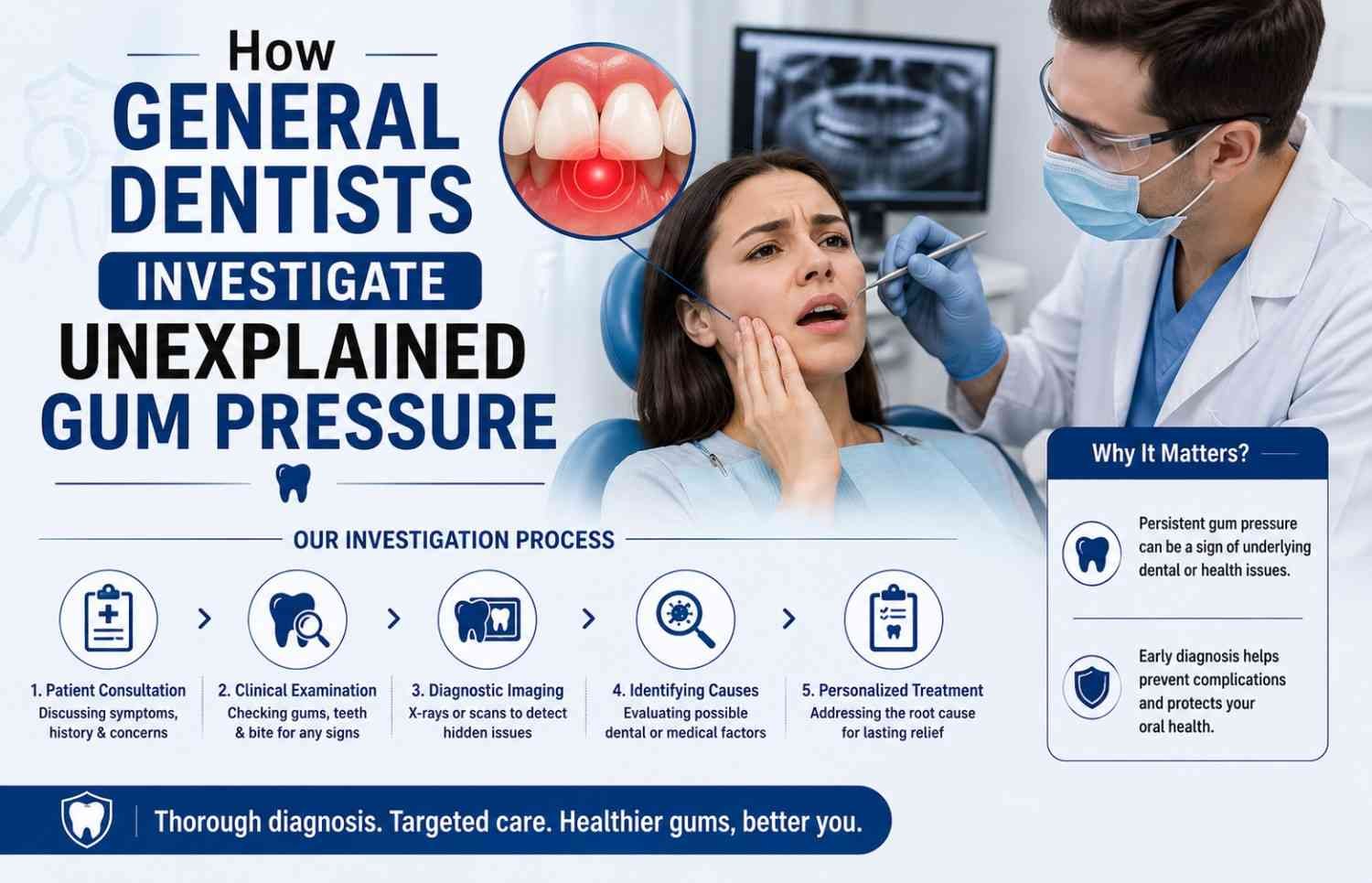
You might be feeling that odd, stubborn sense of fullness or pressure in your gums and wondering why it will not go away. Maybe it started as a small annoyance when you brushed, then turned into something you notice while eating, talking, or trying to fall asleep. When there is no clear cause, it is easy for your mind to jump to the worst case. That reaction is human. The good news is that unexplained gum pressure often has a reason, and a Dedham dentist who is also a general and cosmetic dentist can help sort out what is happening before it grows into something harder to treat.
In simple terms, how general dentists investigate unexplained gum pressure usually comes down to a careful exam, a review of your symptoms and health history, and imaging when needed. They look for signs of gum disease, tooth infection, grinding, trapped food, sinus pressure, bite problems, or irritation from dental work. Because several issues can feel similar, the process matters. Finding the source is what guides the right treatment.
Why Can Gum Pressure Feel So Confusing at First?
Gum pressure is rarely as simple as one symptom pointing to one answer. You may feel swelling without seeing much in the mirror, or notice pressure around one tooth even though the real issue is in the gum tissue nearby. Sometimes the discomfort comes and goes, which makes it tempting to wait and hope it settles down on its own. But if pressure keeps returning, there is usually something behind it.
A dentist often starts by asking questions that seem basic but reveal a lot. When did it begin? Is it sharp, dull, throbbing, or more like fullness? Does it worsen when you bite down? Have you had bleeding, bad breath, sensitivity, fever, or recent dental treatment? Because of this tension, you might wonder why so many questions matter. They matter because pressure from inflamed gums feels different from pressure caused by an infected tooth root, and both can feel different from clenching your jaw at night.
This is also where your daily habits come into play. Brushing too hard, skipping flossing, smoking, stress clenching, or even a stuck popcorn hull can trigger irritation. If your gums look red, bleed easily, or seem to pull away from the teeth, a dentist may consider early periodontal problems. If you want a reliable overview of warning signs and causes, the National Institute of Dental and Craniofacial Research explains gum disease in clear terms.
Also Read: How General Dentists Help Patients With Oral Sensitivity During Seasonal Changes
What Does a General Dentist Check During a Gum Pressure Exam?
So, where does that leave you when you are sitting in the chair? A dentist examining gum discomfort will usually begin with a visual exam of the gums, teeth, and bite. They look for swelling, redness, recession, pus, decay, cracked teeth, food traps, and old fillings or crowns that may not fit well anymore. They may gently press on the gum and tap on the tooth to see what triggers the sensation.
Next comes periodontal probing, which means measuring the space between your gums and teeth. Deeper pockets can point to gum disease or areas where bacteria have built up under the gumline. According to MedlinePlus information on gum disease, gum inflammation can begin quietly, then progress if it is not treated. That is one reason unexplained pressure should not be brushed off.
X rays are also common in a gum pressure evaluation. They help reveal bone loss, hidden decay, abscesses, impacted teeth, and other problems you cannot see by looking alone. If the pressure seems tied to your bite, your dentist may check how your teeth come together and whether grinding or clenching is straining the area. In some cases, pressure that feels like a gum issue is really a tooth nerve issue, a sinus issue, or a combination of both.
Could It Be Gum Disease, a Tooth Infection, or Something Less Obvious?
This is often the hardest part emotionally, because uncertainty can make every possibility sound serious. Still, most causes fall into a few familiar categories. Gum disease is one of the most common. It can create swelling, tenderness, bleeding, and pressure as bacteria irritate the tissue. The CDC overview of periodontal disease notes that it is common and often preventable, especially when caught early.
Another possibility is a tooth infection or abscess. In that case, the pressure may feel deeper, more focused, and more painful when chewing. A cracked tooth can do something similar. Then there are bite issues. If one tooth is hitting too hard, the surrounding ligament can become inflamed, which creates a surprising sense of pressure even when the gums themselves look mostly normal.
There are less obvious causes too. Sinus pressure can create discomfort in the upper gums. Hormonal changes can make gum tissue more reactive. Certain medicines can affect the gums. If you wear aligners, a retainer, or a night guard, fit and wear patterns may also provide clues.
When Should You Watch It at Home and When Should You Call a Dentist?
Home care has a role, but it has limits. Gentle brushing, flossing, warm salt water rinses, and avoiding hard or sticky foods may calm mild irritation. Still, if the pressure lasts more than a few days, worsens, or comes with swelling, bleeding, pus, fever, or pain when biting, it is time to schedule a visit. Waiting can turn a fixable issue into a more costly one.
| Situation | What You Can Do at Home | Why a Dentist May Be Needed |
|---|---|---|
| Mild gum soreness after flossing | Brush gently, floss carefully, rinse with warm salt water | If it lasts beyond a few days, there may be hidden inflammation or buildup |
| Pressure around one tooth when chewing | Avoid chewing on that side | Could point to a bite problem, crack, or infection that needs imaging |
| Swollen gum with bad taste or drainage | Keep the area clean and do not press on it | Can signal an abscess or advanced gum infection |
| Recurring pressure with bleeding gums | Improve daily cleaning if it is comfortable | May be early or moderate gum disease needing professional care |
What 3 Steps Can You Take Right Now?
1. Track the pattern. Write down when the pressure happens, where you feel it, and what makes it worse. Include bleeding, swelling, sensitivity, bad breath, or pain while chewing. Those details help narrow the cause faster.
2. Switch to gentle care. Use a soft toothbrush, avoid aggressive brushing, and keep flossing carefully unless the area is too painful. Irritated gums often need cleaner conditions, not harsher scrubbing.
3. Book an exam if it does not improve quickly. If the sensation stays, returns, or gets stronger, a general and cosmetic dentist can check the gums, teeth, bite, and bone levels to find the source and help you avoid bigger treatment later.
Unexplained gum pressure can make you feel uneasy, especially when you cannot tell whether it is minor irritation or something more. Still, you do not have to guess. With a clear exam and the right follow up, the cause is often found and treated before it turns into a larger problem. If your gums have been sending signals you cannot ignore, now is a good time to schedule a dental visit and get some clarity.