NeilKant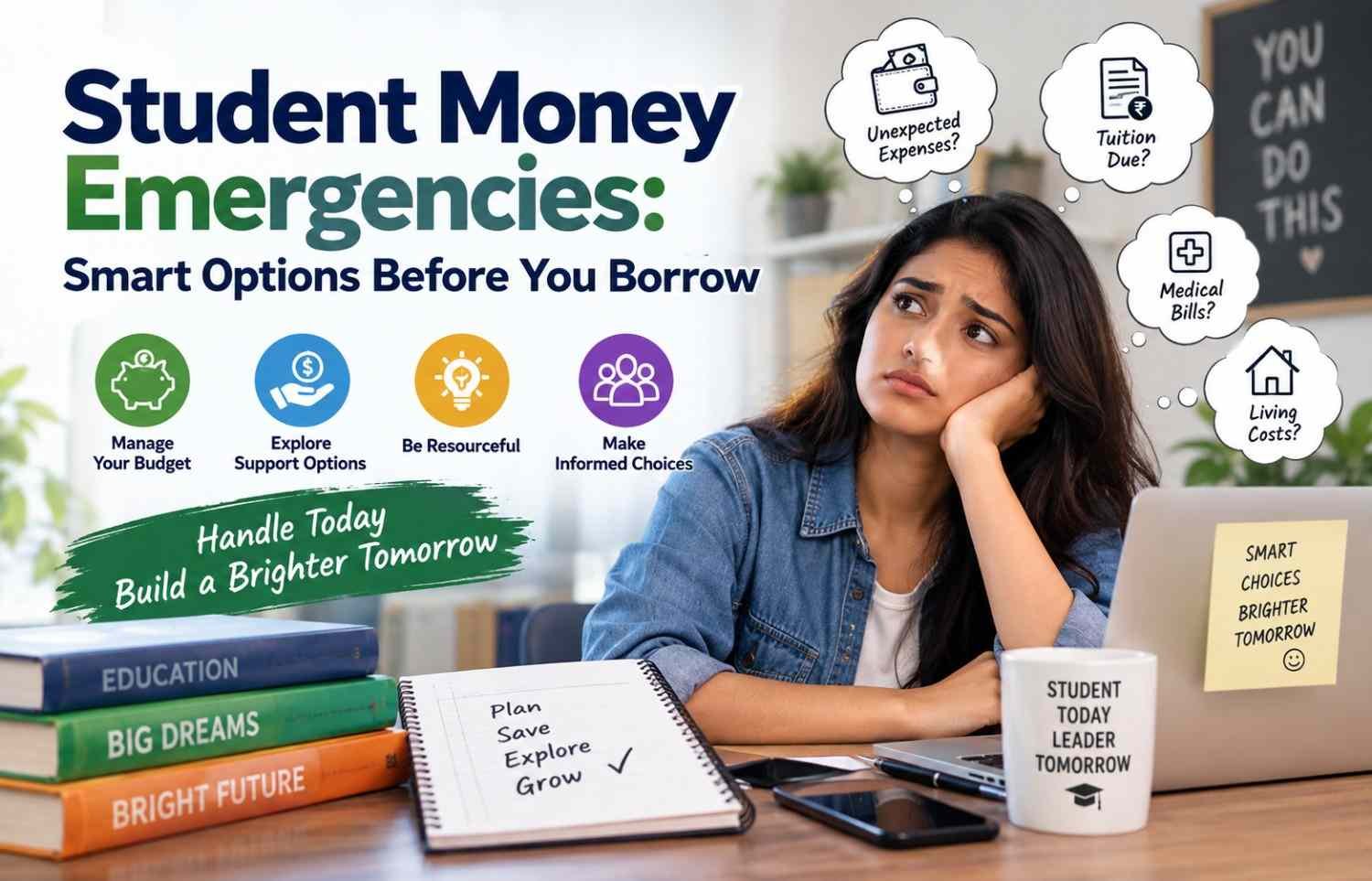
A ₹4,000 lab fee due tomorrow. A phone screen that shattered a week before exams. A hostel deposit gap before the semester’s allowance lands. Student money emergencies are real, and they arrive at the worst times. The instinct, fuelled by ads for instant loan apps aimed at students, is often to borrow first. But for a student, borrowing should almost always be the last option, not the first.
This guide walks through the smarter moves to try before a loan, what a “student loan app” actually is versus what it is marketed as, and how to borrow safely if it genuinely comes to that.
Why Should Students Be Careful With Instant Loan Apps?
Because the maths works against you at exactly the age you can least afford it.
Students are usually new to credit, often on little or no steady income, and especially exposed to the debt traps that high-interest small-ticket loans create. A ₹5,000 loan that feels harmless can carry an effective rate of 30-40% a year, and if you cannot repay on time, late fees and a damaged CIBIL Score follow you for years, right as you are trying to build a clean credit history for bigger things later, like an education loan or a first car.
India has seen real harm from lending marketed aggressively at young, first-time borrowers. So the honest advice is not “which app should a student use?” It is “try everything else first, and borrow only if you genuinely must and genuinely can repay.”
What Should You Try Before Borrowing?
Five options that solve most student emergencies without a loan.
- Your college’s hardship fund: Most universities have emergency financial aid or hardship funds for exactly these situations. Underused because students do not know they exist. Ask the student welfare office; it is often a grant, not a loan.
- Talk to family first: An awkward five-minute conversation with a parent or relative usually beats a 36% loan. Family money comes without interest or a CIBIL entry, and most families would rather help than see you borrow badly.
- Short-term gig or part-time income: For non-urgent gaps, a few days of tutoring, freelancing, or campus work can cover a small emergency without debt.
- Sell something you are not using: An old phone, a textbook you have finished, unused gadgets. Quick cash, zero interest, and you declutter.
- Negotiate the deadline: Many fees, deposits, and bills have more flexibility than they appear to. Asking for a week’s extension is free and often works.
What Is a “Student Loan App” Really?
There is a gap between what these apps are marketed as and what they actually offer.
A genuine student loan usually means an education loan, money for tuition, fees, and course costs, often with a co-borrower (a parent) and repayment beginning after graduation. These are legitimate and appropriate for large education expenses. Banks and NBFCs offer them.
What gets advertised as an “instant loan app for students,” on the other hand, is usually just a small personal loan with student-friendly marketing. It is not a special student product. And critically, it comes with normal personal loan eligibility rules, which most students do not meet.
Who Can Actually Get a Personal Loan as a Student?
The eligibility reality to consider:
- If you are under 18, you cannot take a personal loan at all. It is a legal requirement, not a lender’s choice. No legitimate app will lend to a minor.
- If you are 18 or over but have no income, you generally cannot get an unsecured personal loan on your own. Lenders need to see repayment capacity. A parent or guardian can apply as the primary borrower or co-borrower, with you as the beneficiary.
- If you are 18-plus with verifiable income, an internship stipend, part-time work, freelance earnings, or documented family-supported income, you may qualify for a small personal loan under standard eligibility. This is the narrow group for whom a personal loan is genuinely an option.
The takeaway: for most students, a solo instant personal loan is not actually available, whatever the marketing suggests. The realistic paths are an education loan for course costs, or a parent-backed application for a genuine emergency.
If You Do Borrow, How Do You Do It Safely?
For the narrow case where a student is 18-plus, has verifiable income, and has exhausted the non-debt options, here is how to borrow without getting hurt.
Use only an RBI-registered lender. Confirm the app operates through an RBI-registered NBFC or bank. Stashfin, for instance, runs as a Digital Lending Application of Akara Capital Advisors Private Limited, an RBI-registered NBFC, and applies standard eligibility (18-plus, verifiable income) rather than pretending to be a special student product. Skip any app that cannot show its backing.
Insist on the Key Fact Statement. Show every fee, the interest, the APR, and the total repayment before you sign. No KFS, no signature.
Never pay a fee before disbursal. RBI prohibits it. Any app demanding money upfront is a scam.
Borrow the smallest amount that solves the problem. And have a concrete plan to repay it fast, ideally within any interest-free window the lender offers.
Protect your CIBIL Score. Repay on time, every time. As a young borrower, your clean early credit history is worth more than the loan itself.
Borrow Last, Not First
Student emergencies feel urgent, and urgency pushes people toward the fastest option, usually a loan. But for a student, fast borrowing is rarely the right first move. The hardship fund, the honest conversation with family, the quick gig, the sold-off old phone, these solve most small emergencies without a rupee of interest or a mark on your credit.
If borrowing genuinely becomes necessary and you are eligible, do it carefully: choose an RBI-registered lender like Stashfin under standard eligibility, take the smallest amount that works, set a clear repayment plan, and never pay a fee before disbursal. But reach that step last. The best thing a student can do for their future finances is build a clean credit history, and the surest way to protect it is to avoid debt you didn’t truly need.