NeilKant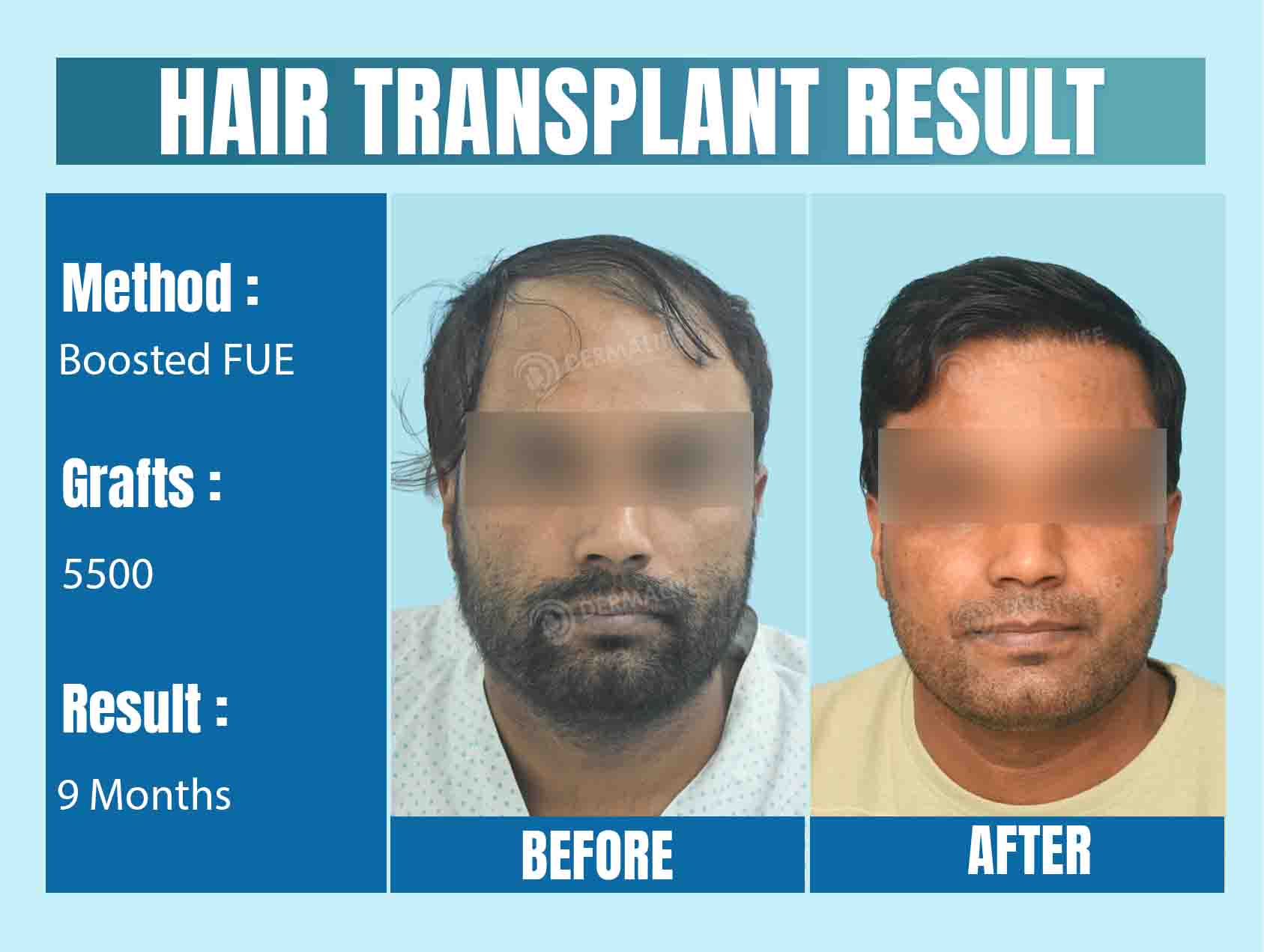
Hair restoration techniques have evolved significantly, giving patients more options than ever before. Among the most commonly discussed approaches are standard Follicular Unit Extraction (FUE) and Boosted FUE. While both methods aim to restore hair in a natural-looking way, there are important differences in how they are performed and how results are optimized.
Understanding these differences helps patients make informed decisions based on their hair loss pattern, goals, and expectations.
Understanding Standard FUE
FUE is a technique in which individual hair follicles are extracted from the donor area, typically the back or sides of the scalp, and implanted into thinning or bald regions.
Because follicles are removed one by one, FUE avoids large incisions and visible linear scars. This makes it suitable for patients who prefer short hairstyles or want a less invasive approach.
Standard FUE focuses primarily on careful extraction and implantation. When performed properly, it can produce natural-looking results with good graft survival.
What Is Boosted FUE?
Boosted FUE builds upon the basic principles of standard FUE but incorporates additional steps aimed at improving graft survival and growth quality.
These steps may include enhanced graft handling protocols, improved hydration, and controlled implantation environments designed to reduce stress on follicles. The objective is to support healthier grafts during the critical transition period after transplantation.
Clinics such as Dermalife Hair and Skin Clinic often emphasize these refinements to optimize outcomes, particularly in larger or more complex cases.
Differences in Graft Survival
One of the key distinctions between FUE and Boosted FUE is the focus on graft survival. Hair follicles are sensitive structures, and even small improvements in handling can influence growth.
Boosted FUE protocols are designed to minimize dehydration and mechanical damage. This can lead to more consistent growth patterns and potentially higher survival rates compared to standard approaches.
However, outcomes still depend on individual biology and proper execution.
Impact on Hairline and Density
Both techniques can produce natural hairlines when planned carefully. The difference lies in how grafts are preserved and implanted.
Boosted FUE places additional emphasis on maintaining follicle integrity, which may support better density over time. This can be especially beneficial when aiming for refined hairline work or when donor hair is limited.
In regions where patients compare hair transplant cost in Delhi, understanding these differences helps explain why outcomes and pricing may vary.
Suitability for Different Hair Loss Patterns
Standard FUE may be sufficient for individuals with mild to moderate hair loss and good donor density.
Boosted FUE is often considered for advanced hair loss, large bald areas, or cases where maximizing graft survival is particularly important. It may also be preferred for patients seeking higher density within donor limitations.
Recovery and Healing
Both FUE and Boosted FUE are minimally invasive and typically involve similar recovery timelines. Small extraction sites heal quickly, and most patients return to routine activities within a few days.
The difference lies more in graft behavior after implantation rather than visible healing time.
Role of Surgeon Skill and Technique
Regardless of the method used, outcomes depend heavily on surgical skill, planning, and attention to detail. Advanced protocols cannot compensate for poor technique or unrealistic planning.
Surgeons like Dr. Gaurav Garg often emphasize that Boosted FUE is not a replacement for good fundamentals, but an enhancement when applied correctly.
Also Read: DEA Number Verification for Physician Targeting: A Complete Guide
Managing Expectations
It is important to understand that neither method guarantees identical results for every individual. Hair characteristics, scalp health, lifestyle, and genetics all influence outcomes.
Both approaches require patience, as visible growth follows natural hair cycles.
Choosing the Right Approach
When selecting a hair transplant clinic in Delhi, patients should focus on evaluation, planning, and transparency rather than method names alone. Understanding how and why a technique is used is more important than the label attached to it.
Conclusion
FUE and Boosted FUE are both effective hair restoration methods when used appropriately. Standard FUE offers reliable, natural results, while Boosted FUE introduces refinements aimed at improving graft survival and consistency.
The best approach depends on individual needs, donor limitations, and long-term goals. Informed decisions are based on understanding these differences rather than chasing technique names.