NeilKant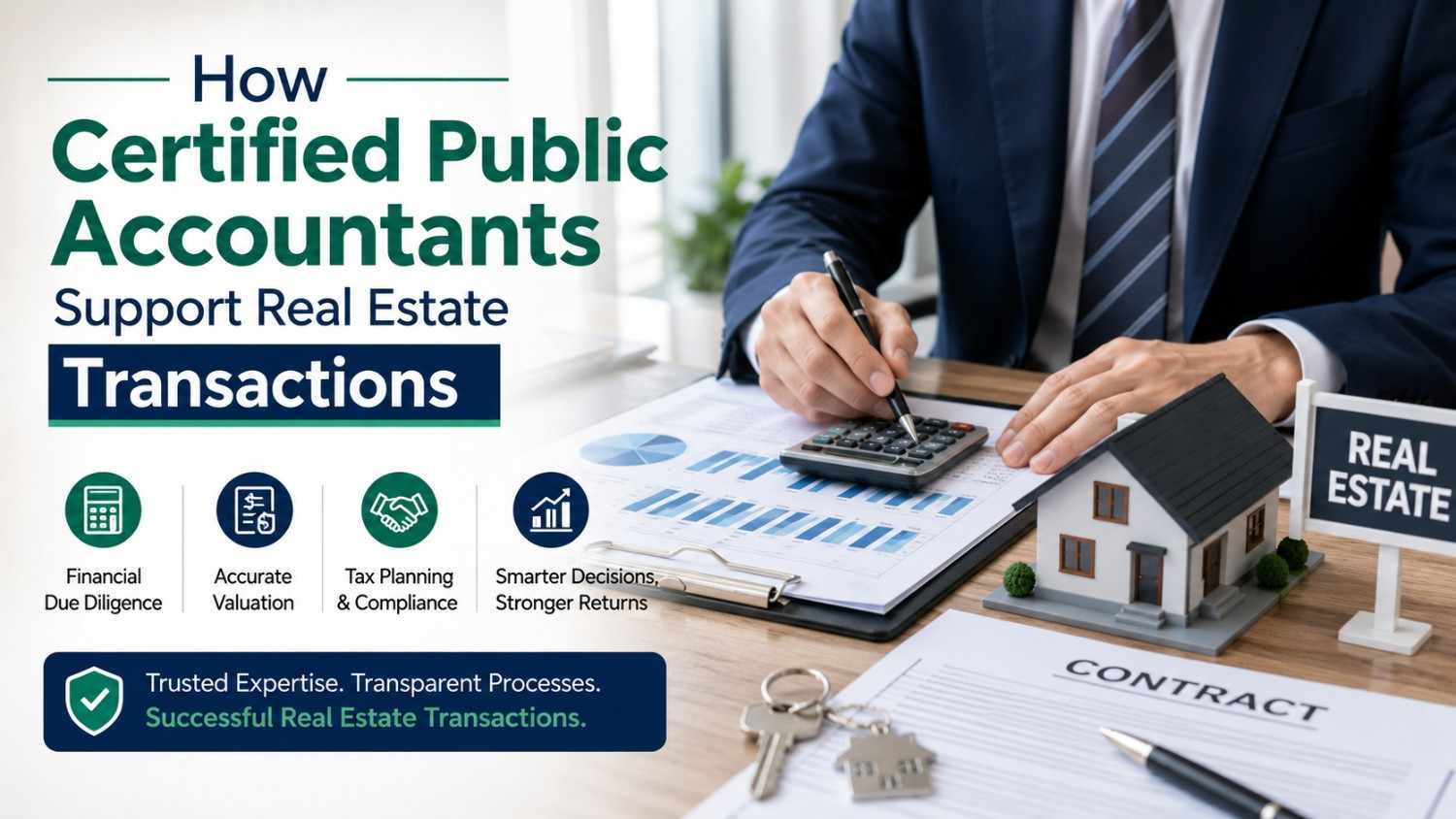
You might be feeling both excited and uneasy right now. Maybe you are about to buy your first home, sell a rental property, or transfer a family house after a major life change. On one hand, real estate feels like a big step forward. On the other, every new form, tax rule, and deadline seems to open up three new questions—especially when you’re working with a CPA firm in San Jose, CA.
It often starts simply. You see a listing, talk to an agent, maybe get pre-approved. Then the words capital gains, basis, depreciation, points, and escrow credits enter the picture, and suddenly you are not just buying or selling a place to live. You are making a series of tax decisions that could follow you for years.
This is where the support of a Certified Public Accountant for real estate transactions can quietly change your experience. Instead of guessing at tax outcomes, you get a clear picture of what this move means for your cash flow, your tax bill, and your long term plans. In plain terms, a CPA helps you avoid unpleasant surprises and capture benefits that many people leave on the table.
So, where does that leave you right now. You may feel behind or worried that you have already made a mistake. That is normal. The good news is that most real estate tax issues can be managed or softened when you understand them early enough, and that is exactly what a thoughtful CPA is trained to do.
Why do real estate transactions feel so confusing in the first place?
The confusion usually comes from a clash between emotion and rules. You are making a deeply personal decision about where you live or how you invest. At the same time, the tax code treats your home or rental as a financial asset with its own strict rules. That tension can leave you wondering if you are missing something important.
Here are a few common stress points.
First, people often do not realize that different types of property are taxed differently. A primary home is not treated the same way as a vacation home or a rental. The IRS has special home related rules, such as the ones explained in the official guidance for homeowners in Publication 530. Without help, it is easy to misread those rules or apply them to the wrong situation.
Second, timing choices can have big tax effects. For example, selling a rental in a year when your income is high can trigger a much larger tax bill than selling in a lower income year. Paying points on a mortgage, making major repairs, or doing improvements just before or after closing can also shift what is deductible and when. A CPA helps you see the timing clearly, instead of finding out months later when your return is due.
Third, there is the emotional side. Real estate often connects to divorce, death, relocation, or retirement. When you are grieving, starting over, or caring for family, you are not in the mood to decode tax law. That is when small oversights can become expensive. Some people forget to track their cost basis. Others lose records of improvements. Years later, they struggle to prove their numbers to the IRS.
If you are wondering what you might be missing, that question itself is a sign you should not carry this alone. A CPA for property transactions steps in to translate the rules into plain language and to walk through your choices before you sign.
Also Read: How Accounting Firms Ensure Accuracy in Financial Statements
How exactly can a CPA steady the ground under your feet?
Think about a few common scenarios and how a CPA would quietly change the outcome.
Imagine you are selling a home you have lived in for several years. You have heard that some or all of the gain might be tax free, but you are not sure how it works. A CPA looks at how long you lived there, whether you used part of it as a home office or rental, and whether you have used the exclusion before. They explain how the home sale exclusion works, show you how to calculate your gain, and help you document your basis. They may even point you to IRS resources such as the IRS real estate tax tips so you can read more at your own pace.
Or imagine you own a rental and are thinking about selling. You have taken depreciation for years, or maybe you should have but did not. A CPA helps you understand how depreciation recapture works, what your approximate tax bill might be, and whether options like installment sales or a like kind exchange could fit your situation. Suddenly, the decision is not just about the offer price. It is about what you actually keep after tax.
There is also protection and peace of mind. In many states, including California, CPAs are licensed and regulated, and there are clear consumer protections in place. If you want to understand what you can expect from a licensed CPA, you can review guidance such as the California Board of Accountancy’s consumer booklet for CPA services. Knowing there are standards can make it easier to trust the advice you receive.
Because of this, the real value of a CPA in real estate is not just about numbers. It is about having someone in the room whose only job is to watch your financial blind spots while you focus on the life change in front of you.
Should you handle real estate tax issues yourself or work with a CPA?
People often wrestle with whether to manage the tax side on their own or bring in professional help. The answer depends on your comfort level and the complexity of your situation. This comparison can help you see the tradeoffs more clearly.
| Area | DIY Tax Handling | Working With a CPA |
|---|---|---|
| Understanding rules | Rely on software, online articles, and your own reading of IRS instructions. Higher risk of misinterpreting terms like basis, gain, and depreciation. | CPA explains rules in plain language and applies them to your specific facts. Lower risk of missing key exceptions or special cases. |
| Time and stress | Significant time spent researching and second guessing. Stress if you are not confident in your final numbers. | CPA handles the technical work. You review decisions instead of building everything from scratch, which reduces stress. |
| Tax savings | You may capture basic deductions but miss lesser known opportunities or timing strategies. | CPA looks for ways to reduce tax within the rules. Potentially better after tax outcome on a large transaction. |
| Audit readiness | Records and calculations may be incomplete. Responding to IRS questions could feel overwhelming. | CPA helps you keep documentation and can assist if the IRS asks questions about your transaction. |
| Best fit | Simpler situations. For example, selling a modest primary home with clear records and no rentals or business use. | Complex cases. For example, rentals, mixed personal and business use, large gains, or multiple properties. |
If you are dealing with one property, no rentals, and a small gain, you may feel comfortable on your own. Once you add tenants, inherited property, home offices, or large profits, working with a real estate CPA usually pays for itself in clarity and reduced risk.
Three practical steps you can take right now
1. Gather every document tied to the property
Start by collecting closing statements from your purchase and any refinance, records of major improvements, property tax bills, and prior year tax returns that show the property. Put them in one folder, physical or digital. Even if you have not chosen a CPA yet, this step alone will lower your anxiety. When you eventually sit down with a professional, having this ready will save time and cost.
2. Write out your real estate story in plain language
Take ten minutes and write a short timeline of the property. When you bought it, how you used it over the years, when you rented it, when you lived in it, and any major changes such as divorce, inheritance, or business use. You do not need perfect dates. An approximate story is enough to start. This helps a CPA quickly see which rules might apply without making you feel like you have to speak in tax code.
3. Have one focused conversation with a CPA before you commit
Before you sign a sale contract, convert a property to a rental, or make a big improvement, schedule a short planning meeting with a CPA who understands real estate. Ask them three questions. What are the likely tax consequences if I do this. Is there a better timing or structure to reduce tax within the rules. What records do I need to keep to protect myself later. One thoughtful conversation at the front end can prevent years of regret.
Moving forward with more confidence and less regret
Real estate should feel like progress, not a source of lingering worry every time tax season comes around. You deserve to understand what you are signing and what it means for your money, without needing to become a tax expert yourself.
With the right CPA by your side, your real estate transaction becomes more than a guess about the future. It becomes a planned step in your financial life, grounded in clear numbers and written rules, and aligned with what matters to you and your family.
You do not have to carry this alone. Reach out to a trusted Certified Public Accountant who works with real estate, bring your questions to the table, and give yourself the relief of knowing you have done this thoughtfully and with support.