NeilKant
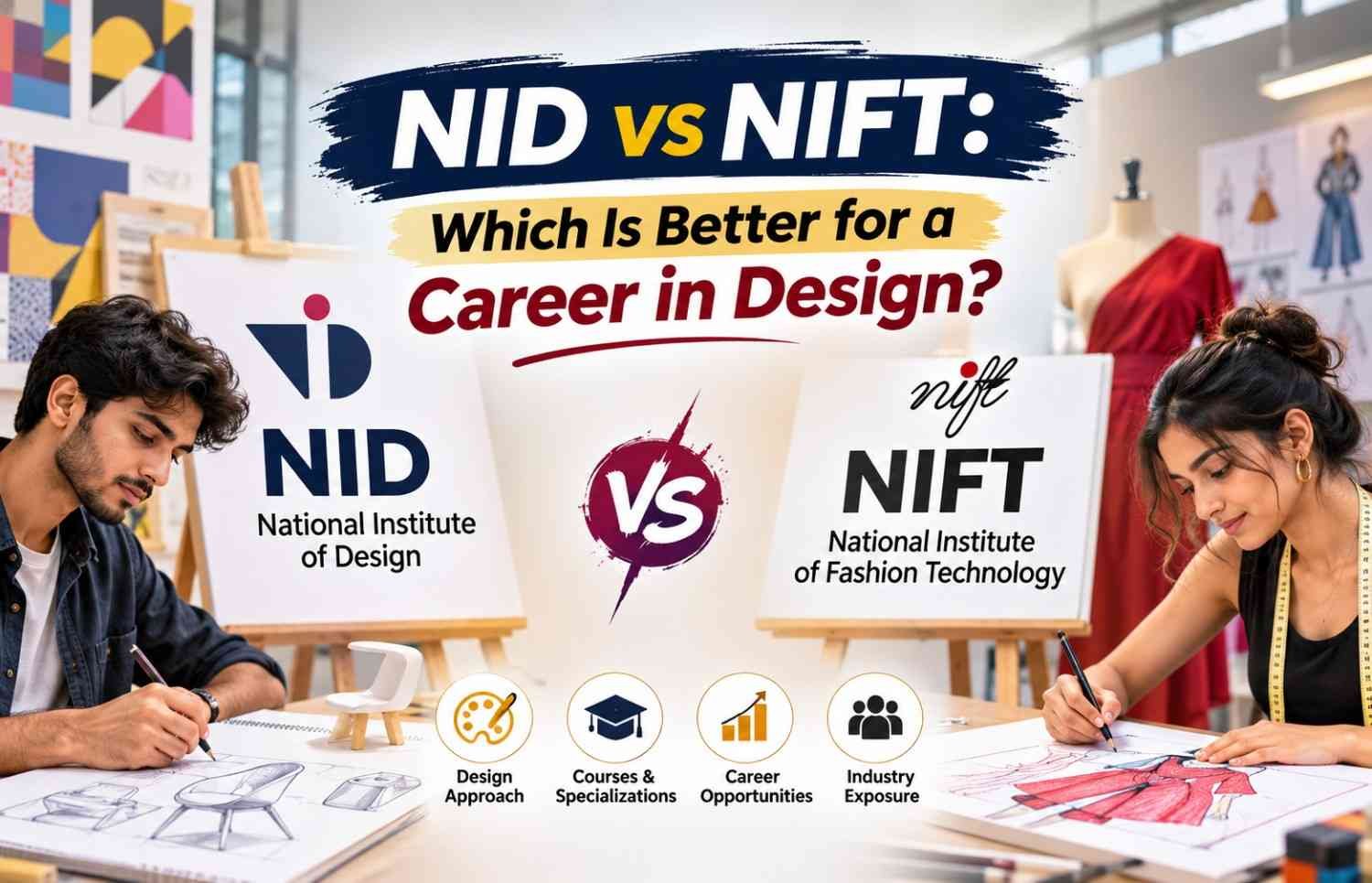
Choosing the right design institute is an important decision for students who aspire to build a successful career in the creative industry. In India, the National Institute of Design (NID) and the National Institute of Fashion Technology (NIFT) are two of the most recognised institutions offering professional design education. Both institutes provide excellent learning opportunities, industry exposure, and career prospects. However, their academic approaches, specialisations, entrance examinations, and career pathways are different.
For students planning to pursue design after Class 12, understanding the differences between NID and NIFT can make the decision easier. While NID focuses on a broad range of design disciplines, NIFT primarily specialises in fashion, textiles, lifestyle, and related creative fields. Let’s compare both institutions to understand which one is better for your career in design.
1. Understanding NID and NIFT
The National Institute of Design (NID) is a premier design institution in India that offers programmes in various design disciplines. Its academic approach focuses on creativity, innovation, research, experimentation, and problem-solving. Students are encouraged to develop original ideas and create practical design solutions for real-world challenges.
The National Institute of Fashion Technology (NIFT), on the other hand, is a leading institution specialising in fashion education, technology, and management. It offers programmes related to fashion design, textile design, fashion communication, accessory design, and fashion technology.
Both institutions aim to develop skilled professionals, but their areas of specialisation and teaching approaches differ.
2. Difference in Courses Offered
One of the major differences between NID and NIFT is the range of courses available to students.
NID offers design programmes across multiple disciplines, including:
- Communication Design
- Industrial Design
- Product Design
- Animation Film Design
- Graphic Design
- Textile and Apparel Design
- Interaction Design
NIFT primarily offers courses in fashion and lifestyle-related disciplines, such as:
- Fashion Design
- Textile Design
- Fashion Communication
- Accessory Design
- Fashion Technology
- Fashion Management
If you are interested in exploring different creative fields, NID may offer a wider range of design specialisations. However, if your passion lies in fashion, apparel, textiles, or fashion business, NIFT can be a suitable choice.
3. NID vs NIFT: Entrance Examination
Both institutes conduct entrance examinations to select candidates for their undergraduate design programmes. However, their examination patterns and selection processes are different.
NID conducts the Design Aptitude Test (DAT), which evaluates a candidate’s creativity, visualisation, observation, analytical thinking, and design problem-solving abilities. The examination process generally includes DAT Prelims and DAT Mains, with the exact selection structure depending on the admission cycle and programme.
NIFT conducts its entrance examination to assess candidates’ creative abilities, logical reasoning, general awareness, communication skills, and design aptitude. For relevant undergraduate programmes, the selection process may include the General Ability Test (GAT), Creative Ability Test (CAT), and Situation Test, depending on the course and admission guidelines.
Students should carefully review the latest examination notifications before beginning their preparation, as the selection pattern and requirements may change.
4. Difference in NID and NIFT Syllabus
The preparation requirements for NID and NIFT differ because both examinations evaluate different aspects of design aptitude.
NID preparation generally focuses on:
- Creative thinking and visualisation
- Drawing and sketching abilities
- Observation and imagination
- Design problem-solving
- Visual communication
- Logical and analytical thinking
NIFT preparation generally includes:
- Creative Ability Test preparation
- Quantitative Ability
- Communication Ability and English Comprehension
- Analytical Ability and Logical Reasoning
- General Knowledge and Current Affairs
- Situation Test preparation, wherever applicable
Before starting your preparation, it is important to understand the latest NIFT syllabus and the corresponding NID examination requirements. This will help you identify important topics, select appropriate study materials, and develop a focused preparation strategy.
5. Career Opportunities After NID and NIFT
Both NID and NIFT offer opportunities to build successful careers in the design industry. However, the career options available depend on the specialisation chosen by students.
After completing a design programme from NID, graduates can explore careers such as:
- Product Designer
- Graphic Designer
- UX/UI Designer
- Communication Designer
- Industrial Designer
- Animation Designer
- Interaction Designer
NIFT graduates can explore opportunities such as:
- Fashion Designer
- Textile Designer
- Fashion Stylist
- Fashion Communication Specialist
- Fashion Merchandiser
- Accessory Designer
- Fashion Marketing Professional
Graduates from both institutions can also explore entrepreneurship, freelance opportunities, design consulting, and higher education.
6. Importance of Previous Year Question Papers
Preparing for design entrance examinations requires regular practice, creativity, and a clear understanding of the examination pattern. Solving previous year question papers is one of the most effective ways to become familiar with the types of questions asked in these examinations.
Practising NID PYQ helps aspirants understand the nature of design aptitude questions, improve visualisation skills, and develop creative problem-solving abilities.
Similarly, solving NIFT PYQ allows students to understand the examination format, practise different question types, and improve their speed and accuracy.
Regular practice also helps candidates identify their strengths and weaknesses, making it easier to plan their preparation effectively.
7. NID vs NIFT: Which Institute Should You Choose?
The decision between NID and NIFT ultimately depends on your interests, creative abilities, and long-term career goals.
Choose NID if:
- You are interested in exploring different design disciplines.
- You enjoy creativity, innovation, and experimentation.
- You want to pursue careers in product, communication, industrial, or interaction design.
- You enjoy solving practical problems through design.
Choose NIFT if:
- You are passionate about fashion and lifestyle industries.
- You want to build a career in fashion or textile design.
- You are interested in fashion communication, styling, or merchandising.
- You want to explore opportunities in fashion business and management.
Both institutions offer valuable educational opportunities. Rather than choosing an institute based only on its reputation, consider the course structure, specialisation, learning environment, and career opportunities that align with your interests.
8. How to Prepare for NID and NIFT Entrance Examinations
Preparing for NID and NIFT requires a combination of conceptual understanding, creativity, regular practice, and effective time management.
Start by understanding the examination pattern and syllabus. Practise drawing, sketching, observation exercises, visualisation, and creative problem-solving questions. For NIFT, also dedicate sufficient time to aptitude, reasoning, English, and general awareness preparation, as applicable to your target programme.
Students who need structured guidance can consider enrolling in NID online coaching to access expert instruction, practice assignments, mock tests, and personalised preparation support.
Maintain a consistent study schedule and regularly evaluate your progress through mock examinations and previous year question papers. Building a strong creative portfolio and improving your observation skills can also support your overall design development.
Conclusion
Both NID and NIFT are excellent choices for students who want to pursue a career in design. NID is particularly suitable for students interested in exploring a wide range of design disciplines, including product, industrial, communication, and interaction design. NIFT is an attractive option for those who want to specialise in fashion, textiles, accessories, and fashion management.
There is no universal answer to which institute is better because the right choice depends on your creative interests and professional ambitions. Understand the courses, compare the entrance examination requirements, and evaluate the career opportunities before making your decision.
With the right preparation strategy, consistent practice, and a clear understanding of your goals, you can work towards securing admission to your preferred design institute and building a rewarding career in the creative industry.